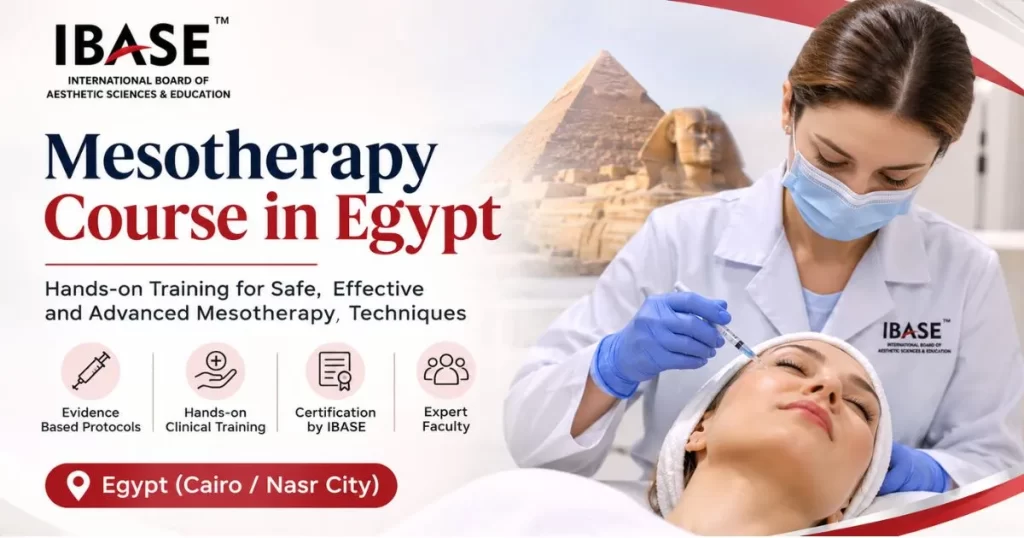
Mesotherapy Course in egypt: Learn Advanced Aesthetic Techniques and Build Your Professional Skills
Author: IBASE Team
Reviewed by: Mohit (15+ Years Experience)
The aesthetic and cosmetic industry continues to grow as more people explore non-surgical treatments to improve their skin appearance and address different cosmetic concerns. Among these treatments, mesotherapy has gained attention for its use in aesthetic medicine and skin-focused procedures.
For medical professionals and qualified aesthetic practitioners, learning mesotherapy can open opportunities to develop specialised knowledge and expand their professional skills. However, proper training, an understanding of skin anatomy, product knowledge, and patient safety are essential before working with these treatments.
Egypt has become an interesting destination for aesthetic education, offering opportunities to explore professional training programmes and connect with experienced practitioners. If you want to develop your knowledge of aesthetic treatments, a Mesotherapy Course in egypt can be a valuable learning opportunity.
In this guide, we will explore what mesotherapy is, what students can expect from professional training, the topics covered, career opportunities, and how to select a suitable training programme in Egypt.
What Is Mesotherapy and Why Is It Popular in Aesthetic Medicine?
Mesotherapy is an aesthetic treatment approach that involves delivering selected substances into specific layers of the skin through specialised techniques. Depending on the treatment indication and applicable regulations, practitioners may use different formulations containing ingredients such as vitamins, minerals, amino acids, and other substances.
The treatment is commonly discussed in relation to skin rejuvenation, hydration, and certain hair and body aesthetic concerns. However, results vary depending on the individual, treatment indication, formulation, and practitioner expertise.
Its growing popularity has increased interest in professional education. Practitioners want to understand how mesotherapy works, which treatment options exist, and how to assess whether a particular approach is suitable for an individual.
Professional training focuses on building knowledge in areas such as:
- Basic skin anatomy and physiology.
- Different mesotherapy applications.
- Product knowledge and formulation awareness.
- Patient consultation and assessment.
- Treatment indications and contraindications.
- Hygiene and infection prevention.
- Potential complications and patient safety.
Understanding these fundamentals helps practitioners develop a responsible approach to aesthetic practice.
Why Choose a Mesotherapy Course in Egypt?
Egypt is an attractive destination for people interested in professional aesthetic education. Its growing cosmetic and medical aesthetics sector creates opportunities for practitioners to explore specialised training and learn about different treatment approaches.
A Mesotherapy Course in egypt may provide an opportunity to study aesthetic concepts in a professional learning environment while gaining exposure to regional industry practices.
Another advantage of choosing Egypt is the opportunity to connect with trainers, aesthetic professionals, and other participants from different backgrounds. Such interactions can help students exchange experiences and develop a broader understanding of the aesthetics industry.
Some reasons professionals consider Egypt for aesthetic training include:
- Opportunities to explore specialised aesthetic education.
- Exposure to different aesthetic treatment approaches.
- Interaction with experienced industry professionals.
- Opportunities to connect with international participants.
- Focused workshops and practical learning opportunities.
- Exposure to the growing Middle Eastern aesthetics market.
Before enrolling, always verify the training provider’s credentials, course curriculum, faculty qualifications, and recognition of the certificate.
What Will You Learn During a Professional Mesotherapy Course?
A professional mesotherapy training programme should cover more than basic treatment concepts. It should help participants understand the science behind aesthetic treatments and the responsibilities involved in providing them.
The curriculum may vary depending on the training academy, course duration, and participant qualifications. However, a comprehensive programme generally introduces important theoretical and clinical topics.
Common learning areas include:
- Introduction to mesotherapy and its applications.
- Skin anatomy and physiology.
- Understanding different treatment formulations.
- Patient consultation and assessment.
- Treatment indications and contraindications.
- Hygiene and infection prevention.
- Potential adverse reactions and complications.
- Patient aftercare and follow-up.
- Ethical responsibilities in aesthetic practice.
In addition, students should understand how to evaluate treatment suitability and communicate realistic expectations to patients.
A good training programme also explains the importance of evidence-based practice, informed consent, and appropriate clinical supervision.
Explore Different Applications of Mesotherapy
Mesotherapy is associated with several aesthetic applications. However, each treatment area requires a clear understanding of the relevant anatomy, clinical evidence, product suitability, and patient-specific considerations.
During professional education, students may explore the following applications.
- Facial Mesotherapy
Facial mesotherapy is commonly discussed in connection with skin hydration, texture, and rejuvenation. Training introduces the concepts behind different formulations and explains how practitioners assess skin concerns.
- Hair and Scalp Mesotherapy
Hair and scalp applications are another area of interest in aesthetic education. Students may explore common hair-related concerns, scalp assessment, treatment limitations, and the importance of identifying underlying causes of hair loss.
- Body Mesotherapy
Some mesotherapy approaches are marketed for body contouring and localised cosmetic concerns. Training should explain the available evidence, limitations, patient selection, and safety considerations associated with these applications.
- Skin Rejuvenation
Aesthetic practitioners may also study mesotherapy-related approaches intended to improve the appearance of tired or dehydrated skin.
It is important to remember that not every formulation or application has the same level of scientific evidence. Responsible practitioners should understand the limitations of available treatments rather than promise guaranteed results.
Who Can Enrol in a Mesotherapy Training Programme?
Mesotherapy involves procedures that may require injections and medical assessment. Therefore, eligibility is an important consideration when choosing a training programme.
A professional Mesotherapy Course in egypt should clearly explain its admission requirements and identify which participants are legally eligible to undertake practical training.
Depending on the programme and applicable Egyptian regulations, suitable participants may include:
- Licensed doctors.
- Qualified dermatologists.
- Medical aesthetic practitioners with appropriate credentials.
- Other healthcare professionals who are legally authorised to perform the relevant procedures.
Students should check whether their existing qualifications meet the course requirements before applying.
Furthermore, completing a training programme does not automatically grant permission to perform medical aesthetic procedures. Participants must follow the licensing, professional scope-of-practice, and regulatory requirements applicable in their country.
The Importance of Practical Training and Patient Safety
Practical education plays an important role in professional aesthetic development. While theoretical knowledge helps students understand treatment concepts, supervised clinical learning helps them recognise patient-related considerations and professional responsibilities.
A well-structured course should explain the importance of proper patient evaluation, hygiene, safe clinical environments, and appropriate supervision.
Some essential safety topics include:
- Understanding relevant facial and skin anatomy.
- Identifying suitable and unsuitable candidates.
- Recognising contraindications.
- Maintaining proper infection prevention standards.
- Understanding potential complications.
- Learning appropriate emergency response principles.
- Providing clear aftercare information.
- Maintaining accurate patient records.
In addition, training providers should explain the importance of informed consent and honest communication about expected outcomes.
Patient safety must always remain a priority. Practitioners should never perform procedures beyond their qualifications or legal scope of practice.
How to Choose the Best Mesotherapy Training Academy in Egypt
Selecting the right training academy is an important decision. Different institutions may offer different course structures, teaching methods, and certification arrangements.
Therefore, students should evaluate the quality of education rather than choosing a programme based only on price or duration.
Before enrolling, consider these factors:
- Trainer Qualifications: Check the professional background and experience of the instructors.
- Course Curriculum: Review the theoretical and practical topics included in the programme.
- Training Environment: Ensure the academy maintains suitable clinical and educational standards.
- Practical Supervision: Confirm whether any practical sessions take place under appropriate qualified supervision.
- Certification: Understand what the certificate represents and whether it has any recognised accreditation.
- Admission Requirements: Confirm that your professional qualifications meet the eligibility criteria.
- Student Support: Ask whether the academy provides learning resources and post-training guidance.
Additionally, ask about course duration, fees, language of instruction, and assessment methods before making a decision.
A transparent training provider will clearly explain what students will learn and what professional recognition the programme does or does not provide.
Career Opportunities After Completing Mesotherapy Training
Professional development can help qualified practitioners expand their knowledge and explore additional areas within aesthetic medicine.
After completing suitable training, eligible professionals may consider incorporating relevant aesthetic knowledge into their existing clinical practice, provided they meet all licensing and professional requirements.
Potential professional pathways include:
- Aesthetic medicine practice.
- Dermatology-related aesthetic services.
- Medical cosmetology.
- Skin rejuvenation services.
- Hair and scalp aesthetic treatments.
- Further advanced aesthetic education.
- Professional development in cosmetic medicine.
However, completing a short course should not be considered a substitute for formal medical qualifications or specialist training.
Long-term success in aesthetic medicine depends on continuous learning, ethical practice, clinical knowledge, and patient trust.
Why Is Egypt Becoming an Interesting Destination for Aesthetic Education?
Egypt has an established healthcare and medical education environment, while interest in cosmetic and aesthetic services continues to create demand for specialised professional learning.
For international participants, studying in Egypt may also provide opportunities to meet professionals from different countries and learn about regional aesthetic industry practices.
Cities such as Cairo offer access to educational institutions, medical facilities, and professional training environments. However, students should independently verify the location, credentials, and facilities of their chosen academy.
When considering an international training programme, also review:
- Travel and accommodation arrangements.
- Course dates and daily schedules.
- Language of instruction.
- Admission and documentation requirements.
- Certificate details.
- Local professional regulations.
- International recognition, where applicable.
Planning these details in advance can make the learning experience more organised and comfortable.
Take the Next Step Towards Professional Aesthetic Education
Aesthetic medicine requires continuous learning, responsible clinical practice, and a strong understanding of patient safety. Developing knowledge through structured education can help qualified professionals stay informed about treatment approaches and industry developments.
If you are exploring a Mesotherapy Course in egypt, take time to compare training academies, review their course content, and understand their certification arrangements.
Choose a programme that balances theoretical education, appropriate supervised learning, and professional responsibility. Most importantly, make sure the training aligns with your existing qualifications and the regulations governing your professional practice.
The right educational experience can help you build knowledge, improve your understanding of aesthetic treatments, and take a more informed approach to your professional development.
Frequently Asked Questions (FAQs)
- What is a mesotherapy course?
It is a professional training programme covering mesotherapy concepts, aesthetic applications, patient assessment, and safety considerations.
- Who can enrol in a mesotherapy course in Egypt?
Eligibility depends on the academy and local regulations. Medical and other appropriately qualified healthcare professionals may be eligible.
- How long does a mesotherapy course take?
Duration varies by academy, curriculum, and training format.
- What topics are covered in mesotherapy training?
Topics may include skin anatomy, treatment applications, product knowledge, patient assessment, and complication management.
- Is practical training included?
Some programmes include supervised practical education, depending on eligibility and course structure.