Nose Fillers Training: Master the Art of Non-Surgical Nose Enhancement
Author: IBASE Team
Reviewed by: Mohit (15+ Years Experience)
Introduction: A New Direction in Aesthetic Education
The aesthetic industry continues to evolve as more people explore non-surgical cosmetic treatments. Among these procedures, nose fillers have gained attention because they can help improve the appearance of certain nasal features without traditional surgery. As interest grows, qualified aesthetic professionals are also looking for structured education to understand the treatment, its limitations and its safety requirements.
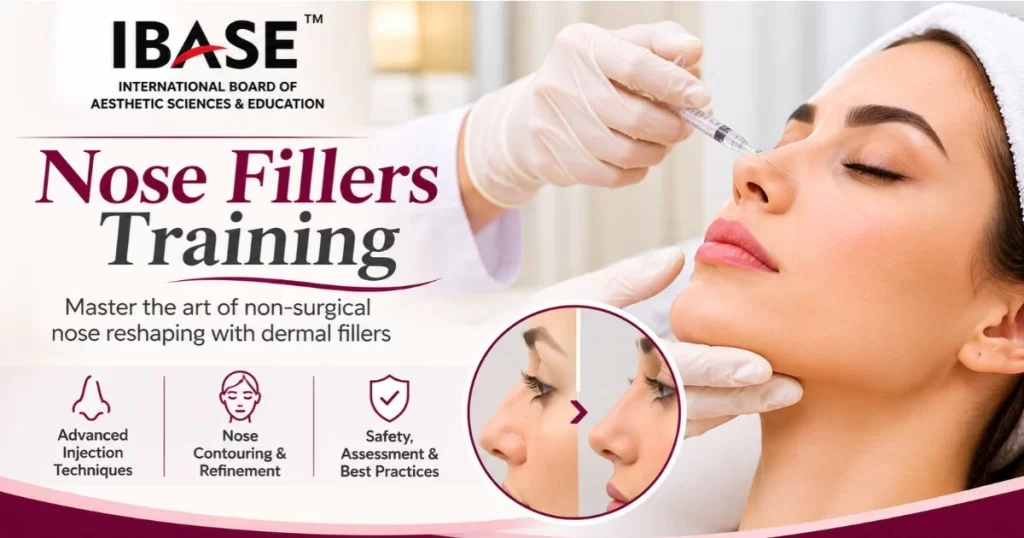
Nose Fillers Training introduces medical professionals to the principles behind non-surgical nasal enhancement. It focuses on facial anatomy, patient assessment, injectable products, clinical decision-making and complication awareness. However, this is a high-risk procedure because the nose contains important blood vessels. Therefore, training must be comprehensive, medically supervised and limited to appropriately qualified practitioners.
What Is Nose Filler Treatment?
Nose filler treatment, often called non-surgical rhinoplasty, uses injectable dermal filler to alter the appearance of selected areas of the nose. Depending on the patient’s anatomy and treatment goals, a qualified medical practitioner may use filler to improve the appearance of a small depression, add definition or create a smoother-looking nasal profile.
Unlike surgical rhinoplasty, this procedure does not involve reshaping the underlying bone or cartilage. Instead, it adds volume beneath the skin. Consequently, it can change the visual contour of the nose, but it cannot make a large nose smaller or correct every structural concern.
Common treatment goals may include:
Improving the appearance of a minor nasal contour irregularity.
Creating a smoother-looking nasal bridge.
Adding definition to selected areas.
Improving the appearance of certain asymmetries.
Understanding the limitations of non-surgical nose enhancement.
Why Professional Nose Filler Education Matters
The nose is a complex anatomical area. It contains blood vessels that connect with the circulation around the eyes. An injection-related vascular complication can cause skin damage and, in rare cases, vision loss. For this reason, practitioners must never treat nose fillers as a routine or beginner-level cosmetic procedure.
A structured Nose Fillers Training programme should explain the anatomy, risks and clinical responsibilities involved. It should also teach practitioners when not to perform treatment and when to refer a patient for specialist assessment.
Professional education should cover:
Nasal anatomy and vascular structures.
Patient suitability and medical history assessment.
Dermal filler properties and limitations.
Infection prevention and clinical hygiene.
Recognition of possible vascular complications.
Emergency protocols and referral pathways.
Informed consent and patient communication.
Understanding Nasal Anatomy Before Treatment
A strong understanding of anatomy is essential before any nasal injectable procedure. Practitioners need to study the skin, soft tissues, cartilage, bone and vascular structures of the nose. These structures vary between individuals, so a standardised approach cannot replace individual assessment.
Training should also explain why the nasal region requires additional caution. Certain blood vessels have connections with the ophthalmic circulation. Therefore, an injection complication may have consequences beyond the immediate treatment area.
Key learning areas include:
External nasal anatomy.
Nasal blood supply and vascular variations.
Relevant facial anatomical landmarks.
Differences in tissue thickness.
Important risk zones.
Anatomical factors that influence patient suitability.
What Does a Nose Fillers Training Programme Cover?
A comprehensive course should combine theoretical education with supervised clinical learning. The objective is not simply to introduce an aesthetic treatment. Instead, it should help eligible medical professionals understand the clinical judgement and safety systems required for responsible practice.
A well-designed programme may include the following educational modules:
Facial anatomy: Understanding the nasal structures and surrounding facial anatomy.
Patient assessment: Reviewing medical history, expectations and suitability.
Filler science: Learning about product characteristics, indications and limitations.
Treatment planning: Understanding how clinicians assess aesthetic concerns and treatment risks.
Clinical safety: Learning infection-control principles and risk-reduction practices.
Complication management: Recognising warning signs and understanding emergency response protocols.
Aftercare: Understanding patient guidance and follow-up responsibilities.
The exact syllabus, practical components and eligibility requirements may differ between training providers. Participants should check the course details before enrolling.
Who Should Consider Nose Fillers Training?
Nose filler education is intended for appropriately qualified healthcare professionals who already have relevant clinical knowledge and injectable-treatment experience. It is not suitable as a shortcut into aesthetic medicine for individuals without the required medical qualifications.
Before enrolling, participants should review the provider’s admission criteria, professional recognition and practical training arrangements.
Potential participants may include:
Qualified doctors working in aesthetic medicine.
Medical practitioners with relevant injectable experience.
Eligible healthcare professionals where local regulations permit.
Practitioners seeking advanced education in facial aesthetics.
Always check local laws and professional licensing rules. Completing a course does not automatically grant legal permission to perform a procedure.
Patient Consultation and Treatment Planning
A responsible consultation begins with understanding the patient’s concerns. Practitioners should discuss the desired outcome, medical history, previous cosmetic procedures and expectations. They must also explain what the treatment can and cannot achieve.
In addition, patient selection plays an important role in safety. Some individuals may need a different treatment approach or specialist referral. A practitioner should never promise a particular result or proceed simply because a patient requests treatment.
A proper consultation should include:
Medical history and relevant contraindications.
Assessment of nasal anatomy and existing concerns.
Discussion of realistic treatment outcomes.
Explanation of potential complications.
Informed consent and clinical documentation.
Appropriate follow-up arrangements.
Safety, Risks and Complication Awareness
Safety is one of the most important parts of nasal filler education. Although dermal fillers are widely used in aesthetic medicine, injections in the nose carry significant risks. Vascular occlusion can interrupt blood supply to the skin and may lead to tissue injury. Rarely, complications can affect vision.
For that reason, training must cover early recognition, urgent escalation and emergency response. Practitioners should understand that suspected vascular compromise requires immediate clinical assessment and management under an appropriate protocol. Delays can increase the risk of permanent injury.
Important safety topics include:
Recognising signs of vascular compromise.
Understanding the risk of skin necrosis.
Recognising symptoms that may indicate ocular complications.
Maintaining appropriate emergency preparedness.
Following evidence-based clinical protocols.
Arranging urgent specialist care when required.
How to Choose the Right Nose Fillers Training Course
Choosing a course requires more than comparing its duration or fee. Participants should review the trainer’s qualifications, clinical experience, teaching approach and the level of supervision provided during practical sessions.
Furthermore, a credible provider should clearly explain the course’s learning outcomes and limitations. Be cautious of programmes that promise guaranteed results, quick certification or independent practice without checking professional eligibility.
Before enrolling, consider:
Trainer qualifications and relevant clinical experience.
Course eligibility and admission requirements.
Detailed anatomy and safety modules.
Supervised practical education, where appropriate.
Complication recognition and emergency training.
Certificate details and professional recognition.
Post-course educational support.
The Importance of Continuing Education in Aesthetic Medicine
Aesthetic medicine changes as clinical evidence, products and safety recommendations develop. Therefore, completing one training programme should not be treated as the end of professional learning.
Practitioners should continue reviewing current research, attending relevant clinical education and following updated professional guidance. They should also maintain accurate records and practise within their competence and legal scope.
Continuing education can help professionals:
Strengthen their understanding of facial anatomy.
Stay informed about product developments.
Improve patient communication.
Review current safety recommendations.
Recognise when a procedure is unsuitable.
Maintain responsible clinical standards.
Conclusion: Build Knowledge Before Building Confidence
Non-surgical nose enhancement requires detailed anatomical knowledge, careful patient selection and a strong commitment to safety. Although nose fillers may offer aesthetic benefits for selected patients, the procedure also carries serious risks that practitioners must understand before considering clinical practice.
A structured Nose Fillers Training programme can support professional learning when it includes comprehensive theory, appropriate supervision, complication awareness and clear eligibility standards. Ultimately, responsible aesthetic practice begins with education, realistic expectations and patient safety.
For healthcare professionals exploring advanced aesthetic education, reviewing the course curriculum, trainer credentials and clinical safety components is an important first step. Under the Ibase website name, this topic should only be published if the business genuinely offers or represents this type of medical training.
Frequently Asked Questions
Q What is Nose Fillers Training?
It is advanced aesthetic education covering nasal anatomy, filler science, patient assessment and treatment safety.
Q Who can enrol in nose filler training?
Eligibility generally depends on medical qualifications, clinical experience and local regulations.
Q Is nose filler treatment permanent?
No. Most hyaluronic acid fillers are temporary, and results vary between individuals.
Q Is non-surgical rhinoplasty risk-free?
No. It carries serious risks, including vascular occlusion, skin damage and rare vision complications.
Q Does training include practical sessions?
Some programmes include supervised practical education. Check the provider’s curriculum before enrolling.