Elevate Your Aesthetic Career with PDO Thread Lift Training in Egypt: A Complete Guide for Medical Professionals
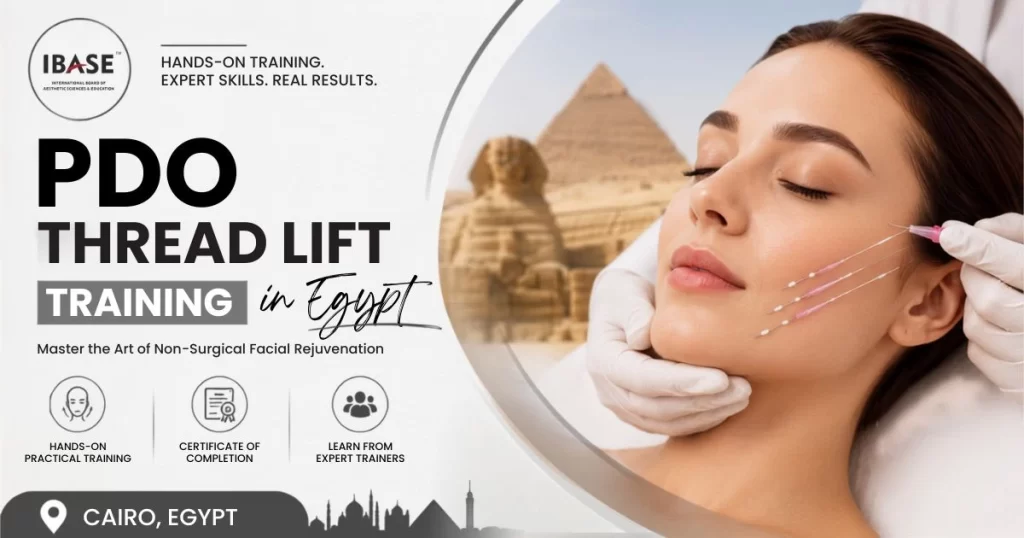
Author: IBASE Team
Reviewed by: Mohit (15+ Years Experience)
The field of aesthetic medicine is evolving rapidly, with more patients seeking minimally invasive treatments that enhance facial contours and address signs of aging without surgery. Among these advanced procedures, PDO thread lifting has gained significant attention for its ability to support facial rejuvenation while requiring minimal downtime when performed by appropriately trained professionals.
As the demand for non-surgical aesthetic treatments continues to grow, healthcare professionals are increasingly looking for specialized education to expand their clinical skills. Enrolling in PDO Thread Lift Training in Egypt provides an excellent opportunity to learn the principles, techniques, patient assessment, and safety considerations associated with this advanced aesthetic procedure.
At Ibase, eligible healthcare professionals can enhance their knowledge through structured education that combines theory with supervised practical learning, helping them build confidence in the field of aesthetic medicine.
Why PDO Thread Lift Procedures Are Transforming Modern Aesthetic Medicine
Patients today often prefer treatments that deliver natural-looking facial rejuvenation without undergoing major surgery. As a result, PDO thread lifting has become a widely discussed treatment option within aesthetic medicine.
Unlike traditional surgical facelifts, PDO thread procedures are minimally invasive and are designed to support tissue repositioning while stimulating collagen production over time. However, treatment outcomes vary depending on patient factors, technique, and clinical assessment.
For healthcare professionals, understanding these procedures requires comprehensive education. Therefore, PDO Thread Lift Training in Egypt focuses not only on procedural techniques but also on patient evaluation, anatomy, safety protocols, and ethical practice.
What Is PDO Thread Lift Training?
PDO Thread Lift Training in Egypt is a professional educational program designed for eligible healthcare practitioners who wish to expand their knowledge of thread lifting procedures.
The course introduces participants to important concepts including facial anatomy, thread types, patient consultation, treatment planning, insertion techniques, aseptic protocols, complication awareness, and post-treatment care.
Rather than simply teaching procedural steps, quality training emphasizes clinical reasoning and patient safety. This approach helps practitioners understand when treatment may be appropriate and when alternative recommendations should be considered.
Why Egypt Is Becoming a Destination for Aesthetic Medical Education
Egypt has emerged as an important center for professional medical education in the Middle East and North Africa. With growing interest in aesthetic medicine, healthcare professionals from different countries now travel to Egypt for specialized clinical training.
Cities such as Cairo provide access to experienced trainers, educational institutions, and modern learning environments. Consequently, PDO Thread Lift Training in Egypt has become increasingly popular among doctors and other eligible healthcare professionals seeking internationally relevant aesthetic education.
Additionally, training closer to home offers many regional practitioners a practical alternative to traveling farther abroad for similar educational opportunities.
What You Will Learn During PDO Thread Lift Training
A comprehensive course provides much more than practical demonstrations. Participants develop both theoretical knowledge and clinical understanding that support responsible practice.
Core subjects generally include:
- Facial Anatomy
- Aging Process of the Face
- PDO Thread Types
- Patient Assessment
- Consultation Skills
- Treatment Planning
- Indications and Contraindications
- Facial Mapping
- Sterile Technique
- Thread Insertion Principles
- Safety Protocols
- Complication Awareness
- Patient Aftercare
- Clinical Documentation
- Professional Ethics
By covering these areas, PDO Thread Lift Training in Egypt helps practitioners build a stronger educational foundation before performing procedures within their professional scope.
Understanding Facial Anatomy: The Foundation of Safe Practice
Every successful aesthetic procedure begins with a detailed understanding of anatomy. The face contains a complex network of muscles, nerves, blood vessels, fat compartments, ligaments, and connective tissues.
Therefore, anatomy forms one of the most important components of PDO Thread Lift Training in Egypt. Participants study facial structures to better understand treatment planning and procedural considerations.
Moreover, anatomical knowledge helps practitioners appreciate why every patient’s facial structure is unique. Instead of applying identical techniques to every case, professionals learn to individualize treatment planning based on careful assessment.
Hands-On Learning Builds Clinical Confidence
While theory provides the foundation, practical education helps transform knowledge into clinical competence.
Depending on the course format and participant eligibility, PDO Thread Lift Training in Egypt may include:
- Live Demonstrations
- Supervised Practical Sessions
- Clinical Case Discussions
- Facial Assessment Exercises
- Treatment Planning Workshops
- Technique Demonstrations
- Hands-On Learning
- Faculty Feedback
Practical experience allows participants to ask questions, receive constructive guidance, and refine their understanding in a supervised educational setting.
Patient Assessment Is More Important Than the Procedure
Many people assume that aesthetic medicine begins with treatment. In reality, it begins with careful consultation and patient assessment.
Before considering any procedure, practitioners should evaluate facial anatomy, skin condition, patient expectations, medical history, contraindications, and overall treatment suitability.
During PDO Thread Lift Training in Egypt, participants learn structured consultation techniques that encourage informed decision-making and realistic patient expectations.
This patient-centered approach supports ethical practice and responsible treatment planning.
Patient Safety Must Always Come First
PDO thread lifting is considered a minimally invasive procedure, but like all medical treatments, it carries potential risks and complications.
Therefore, quality education emphasizes patient safety throughout every stage of learning.
Important safety topics include:
- Infection Control
- Sterile Technique
- Contraindications
- Patient Selection
- Emergency Preparedness
- Complication Recognition
- Documentation
- Aftercare Instructions
- Professional Communication
Understanding these areas enables practitioners to approach treatment more responsibly after completing PDO Thread Lift Training in Egypt.
Who Can Join PDO Thread Lift Training?
Eligibility depends on local regulations, licensing requirements, and the specific training provider.
Depending on these requirements, courses may be available to:
- Medical Doctors
- Dermatologists
- Plastic Surgeons
- Dentists
- Nurses
- Other Eligible Healthcare Professionals
Prospective participants should always confirm that they meet both the course requirements and any applicable regulatory or professional obligations before enrolling in PDO Thread Lift Training in Egypt.
Career Development in Aesthetic Medicine
The demand for non-surgical aesthetic treatments continues to increase worldwide. As a result, healthcare professionals are exploring opportunities to expand their knowledge and services through continuing education.
Completing PDO Thread Lift Training in Egypt may contribute to broader professional development alongside additional education in areas such as:
- Dermal Fillers
- Botulinum Toxin
- Skin Rejuvenation
- Facial Assessment
- Combination Treatment Planning
- Advanced Aesthetic Procedures
However, continuing education should remain an ongoing process. Practitioners benefit from advanced courses, mentorship, clinical experience, and regular updates as aesthetic medicine evolves.
How to Choose the Right PDO Thread Lift Training Course
Selecting the right educational program requires careful evaluation.
Before enrolling, consider asking:
- Is the course designed for eligible healthcare professionals?
- Who are the trainers?
- Does the curriculum include facial anatomy?
- Are patient safety topics covered?
- Is practical learning available?
- Does the course discuss complication awareness?
- What certification is provided?
- Does the program include post-training support?
- Is the institution well established?
Choosing a comprehensive PDO Thread Lift Training in Egypt program helps participants build both confidence and competence.
Why Choose Ibase for PDO Thread Lift Training in Egypt?
Ibase is committed to providing structured medical aesthetic education for eligible healthcare professionals seeking to expand their clinical knowledge.
Training programs emphasize:
- Comprehensive Theory
- Facial Anatomy Education
- Patient Assessment
- Practical Learning
- Experienced Faculty
- Safety-Oriented Education
- Modern Learning Environment
- Professional Development
Located in Egypt, Ibase offers specialized courses designed to help healthcare professionals explore advanced non-surgical aesthetic procedures while maintaining high educational standards.
For practitioners searching for PDO Thread Lift Training in Egypt, Ibase provides an environment that supports continuous learning, responsible practice, and professional growth.
Learning Never Stops in Aesthetic Medicine
Aesthetic medicine continues to evolve as new research, products, technologies, and techniques become available.
Therefore, completing PDO Thread Lift Training in Egypt should be viewed as the beginning of a continuous learning journey rather than the final destination.
Successful practitioners remain committed to:
- Continuing Education
- Clinical Skill Development
- Patient Safety
- Ethical Practice
- Professional Growth
- Evidence-Based Learning
By maintaining this mindset, healthcare professionals can continue refining their knowledge throughout their careers.
Conclusion: Invest in Knowledge Before You Invest in Technique
Advanced procedures require advanced education. While PDO thread lifting has become an increasingly popular aesthetic treatment, responsible practice begins with comprehensive training rather than simply learning procedural steps.
A high-quality PDO Thread Lift Training in Egypt program equips eligible healthcare professionals with the knowledge of anatomy, patient assessment, treatment planning, safety considerations, and practical techniques needed to build confidence in aesthetic practice.
At Ibase, participants receive structured education designed to support long-term professional development in the growing field of non-surgical aesthetic medicine.
Frequently Asked Questions (FAQ)
- What is PDO Thread Lift Training in Egypt?
PDO Thread Lift Training in Egypt is a professional educational program for eligible healthcare professionals covering facial anatomy, patient assessment, PDO thread techniques, treatment planning, safety protocols, and complication awareness.
- Who can join the training?
Eligibility depends on local regulations and course requirements. Programs are generally intended for doctors, dentists, dermatologists, plastic surgeons, nurses, and other eligible healthcare professionals.
- Does the course include practical training?
Many programs include supervised practical learning, demonstrations, clinical discussions, and hands-on sessions depending on the curriculum.
- Why is facial anatomy important for PDO thread lifting?
A detailed understanding of facial anatomy supports treatment planning, patient assessment, and awareness of important anatomical structures relevant to safe practice.
- Does the course cover patient safety?
Yes. Comprehensive training includes infection control, patient selection, contraindications, sterile techniques, complication awareness, and aftercare guidance.
- Is previous aesthetic experience required?
Course eligibility and prerequisites vary. Participants should review the admission requirements before enrolling.
- Why choose Ibase?
Ibase provides structured aesthetic education with experienced trainers, practical learning opportunities, anatomy-focused teaching, and a strong emphasis on patient safety.
- Can this training support career development?
For eligible healthcare professionals, the course may contribute to continuing professional development within aesthetic medicine alongside ongoing education and clinical experience.
Visit www.ibase.info.com or contact IBASE to book your seat.
- Scar Subcision Course Training: Master Advanced Scar Correction Techniques with IBASE
- Best Aesthetic Academy in Egypt: A Complete Guide to Choosing the Right Training Institute
- Aesthetic Anatomy Course Egypt: Master the Anatomy Behind Safe & Precise Aesthetic Practice
- Microneedling Course in Egypt: Build Practical Skills for Modern Skin Rejuvenation
- ACP Face Rejuvenation Training: Master the Art of Modern Facial Rejuvenation
- Scar Subcision Course in Egypt: Master the Science of Acne Scar Correction with Confidence
- PRP Training Course in Egypt: Build Practical Skills for Modern Aesthetic Practice
- Cosmetic Botox Course in Egypt: A Practical Path to Modern Aesthetic Training
- Advance Your Aesthetic Career with a PDRN Training Course in Egypt
- Advance Your Aesthetic Career with a Scalp Threads Course in Egypt
- Unlock Your Aesthetic Expertise with Mono Threads Training in Egypt
- Master Advanced Aesthetic Techniques with Advanced Botox and Fillers Training in Egypt
- Elevate Your Aesthetic Career with PDO Thread Lift Training in Egypt: A Complete Guide for Medical Professionals
- Beyond the Scalpel: How Non-Surgical Medical Aesthetic Training Is Shaping the Future of Aesthetic Practice
- Thread Lift Certification in Nasr City Egypt: Master the Art of Non-Surgical Facial Rejuvenation with IBASE
- Skin Booster Training in Nasr City Egypt: Transform Your Aesthetic Career with Hands-On Professional Learning
- Cosmetic Botox Course in Egypt: Transform Your Career with Advanced Aesthetic Training
- Sculpting Confidence: Why HA Fillers Training in Nasr City Egypt Is the Gateway to a Thriving Aesthetic Career
- The Art of Aging Backward: Why Biostimulatory Fillers in Nasr City Are Transforming Modern Aesthetic Treatments
- IV Excellence Starts Here: Your Complete Guide to IV Infusion Therapy Training in Nasr City
- Turn Back Time Gracefully: The Complete Guide to Neck Rejuvenation in Nasr City
- Mastering Skin Transformation: The Rising Demand for Chemical Peel Training in Nasr City
- Glow Beyond Time: The Ultimate Guide to Facial Rejuvenation Training in Nasr City
- Sculpting Time: Mastering Facial Balance with Temporal Fillers Training in Nasr City
- Hybrid Fillers Training in Nasr City: A Comprehensive Guide (2026)
- Mastering Precision: The Ultimate Guide to Injectors Anatomy Training in Nasr City
- Sculpting Confidence: The Ultimate Guide to Lip Fillers Training
- Chin & Cheeks Filler Training in Nasr City, Cairo – Elevate Your Aesthetic Career with IBASE
- Advanced Botox Course in Nasr City – Complete Guide for Aesthetic Professionals
- A Complete Guide to Botox and Fillers Certification for Medical Professionals
- Lift, Tighten & Rejuvenate Your Skin Without Surgery or Long Recovery
- Best Lip Filler Training Professional Aesthetic Course in Cairo, EGYPT | iBase
- Best Non Invasive Tummy Fat Removal
- Best Non Surgical Body Sculpting in Cairo, Egypt (Nasr City) – iBase
- Top Stomach Contouring Non Surgical in Cairo, Egypt Nasr City
- Best Non Invasive Fat Removal in Cairo, Egypt Nasr City | ibase
- Best Stomach Contouring Non Surgical in Cairo, Egypt – Safe, Modern Body Shaping by IBASE
- Best Non Invasive Body Contouring in Cairo, Egypt (Nasr City)
- Professional Aesthetic Training Programs in AL Karama, Dubai
- Non Surgical Body Contouring in Cairo, EGYPT | IBASE
- Best Foundation Aesthetic Training in AL Karama, Dubai | IBASE
- Top Skills You Learn in Advanced Aesthetic Training Programs
- How Aesthetic Training Boosts Your Career in the Beauty & Wellness Industry
Need Any Help?
House No.100, New Rajdhani Enclave Preet Vihar, New Delhi – 110092, India
