Scar Subcision Course in Egypt: Master the Science of Acne Scar Correction with Confidence
Author: IBASE Team
Reviewed by: Mohit (15+ Years Experience)
Acne scars can remain long after active acne has disappeared, often affecting skin texture, confidence, and the way light reflects across the face. As aesthetic medicine continues to evolve, practitioners are exploring treatment approaches that address the structural causes behind depressed scars rather than focusing only on the skin surface.
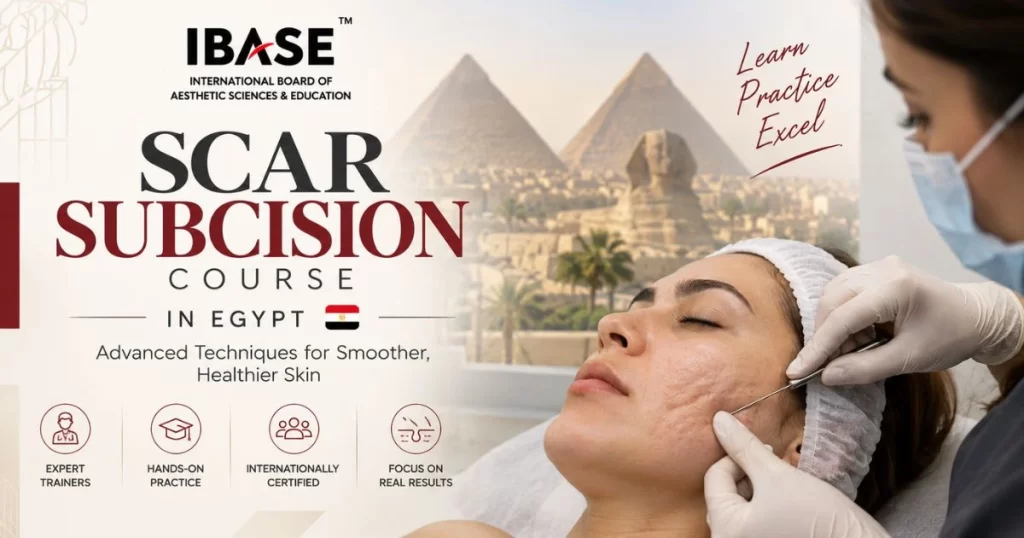
A Scar Subcision Course in egypt can help medical and aesthetic professionals develop a stronger understanding of subcision, patient assessment, scar classification, treatment planning, safety, and practical clinical considerations. Through structured education, practitioners can build knowledge that supports more informed treatment decisions while understanding the limitations and individual nature of scar correction.
Understanding Why Acne Scars Need a Structural Approach
Acne scars are not all the same. Some appear as shallow depressions, while others are deeper and tethered to underlying tissue. Therefore, choosing an appropriate treatment begins with identifying the type, depth, location, and characteristics of the scar.
Subcision is generally discussed as a technique designed to release fibrous attachments beneath certain depressed scars. These attachments can pull the skin downward, creating a visible indentation. By learning the underlying anatomy and mechanism, practitioners can better understand why treatment planning matters.
A Scar Subcision Course in egypt introduces these principles in a structured educational environment. Instead of approaching every scar in the same way, learners can develop a more analytical approach based on scar morphology and individual patient factors.
What Is Subcision and How Does It Work?
Subcision is a minimally invasive aesthetic technique in which an appropriate instrument is used beneath the skin to release selected fibrous bands associated with certain depressed scars. The goal is to reduce tethering and allow the affected area to remodel over time.
However, subcision is not simply about inserting a needle or instrument beneath a scar. Successful clinical practice requires knowledge of facial anatomy, appropriate patient selection, tissue planes, technique considerations, aseptic practice, and complication management.
For this reason, professional education is particularly important. A well-structured course helps learners understand both the potential applications and the boundaries of the procedure.
Learn Scar Classification Before Choosing a Technique
One of the most important concepts in scar treatment is classification. Acne scars can present in different patterns, including rolling, boxcar, and ice-pick scars. Each morphology has different characteristics, and consequently, treatment approaches may differ.
Rolling scars, for example, may have dermal or subdermal tethering that makes them particularly relevant when discussing subcision. Meanwhile, certain narrow and deep scars may require other treatment strategies. Therefore, practitioners should avoid assuming that subcision is appropriate for every acne scar.
During a Scar Subcision Course in egypt, understanding scar morphology can become a central part of treatment planning. This knowledge helps practitioners evaluate patients more systematically and consider whether subcision should be used alone or as part of a broader treatment plan.
Anatomy: The Foundation of Safe Aesthetic Practice
Facial anatomy plays a critical role in aesthetic procedures. The face contains multiple tissue layers, blood vessels, nerves, and anatomical structures that require careful consideration during any invasive treatment.
A professional course should therefore go beyond demonstrating a technique. Learners need to understand relevant tissue planes, regional anatomy, variations between patients, and areas where additional caution may be necessary.
At IBASE, structured aesthetic education can help practitioners connect anatomical knowledge with clinical decision-making. The objective is not simply to learn where a procedure is performed, but to understand why anatomical awareness is essential for responsible practice.
Patient Assessment Comes Before Treatment
Patient assessment is one of the most important steps in scar management. Before considering a procedure, practitioners should evaluate the patient’s medical history, skin condition, scar characteristics, previous treatments, expectations, and suitability for the planned intervention.
Furthermore, realistic communication is essential. Acne scar improvement can vary considerably between individuals, and complete scar removal should not be presented as a guaranteed outcome. Good consultation involves explaining realistic possibilities, limitations, risks, recovery considerations, and alternative options.
A Scar Subcision Course in egypt can help practitioners develop a structured approach to consultation and treatment planning. This educational foundation can be particularly valuable for professionals who want to incorporate scar-focused procedures into their existing aesthetic practice.
Practical Training Helps Connect Theory with Clinical Thinking
Reading about subcision provides useful background, but hands-on education can offer a different learning experience. Practical training allows participants to observe technique demonstrations and understand how theoretical concepts translate into clinical workflows.
However, practical training should always be conducted within appropriate professional and regulatory boundaries. Participants should understand that course completion does not automatically replace local licensing, credentialing, or institutional requirements.
The value of a professional Scar Subcision Course in egypt lies in combining theoretical knowledge with supervised learning and clinical discussion. This approach can help practitioners identify common challenges and think through different treatment scenarios.
Understanding Combination Approaches for Acne Scars
Modern scar management often involves more than one modality. Depending on scar type and patient suitability, practitioners may consider combinations involving techniques such as microneedling, fractional resurfacing, chemical treatments, fillers, or other aesthetic procedures.
The important point is that combination treatment should not become a routine formula. Instead, each modality should have a clear purpose within the treatment plan. Practitioners need to understand which scar characteristics a particular technique may address and when combining procedures could increase complexity or risk.
A comprehensive training program can therefore introduce learners to treatment planning rather than focusing exclusively on one procedure. This broader perspective can support more thoughtful and individualized aesthetic care.
Safety, Infection Control and Complication Awareness
Any invasive aesthetic procedure requires careful attention to safety. Proper infection-control practices, appropriate patient preparation, suitable equipment, and post-procedure instructions are all important components of responsible treatment.
Practitioners should also understand potential complications and how to recognize concerns that may require medical evaluation. Bruising, swelling, tenderness, inflammation, infection, pigmentary changes, or other unwanted outcomes can occur depending on the procedure and individual patient factors.
Therefore, a Scar Subcision Course in egypt should ideally address safety alongside technique. Learning what can go wrong—and how to respond appropriately—is just as important as learning the intended procedure.
Why Choose Egypt for Advanced Aesthetic Education?
Egypt has become an important destination for professionals seeking aesthetic and medical education in the region. Training in Egypt can provide opportunities for structured learning, professional networking, and exposure to different approaches within aesthetic medicine.
Moreover, participants may value the opportunity to study in an environment where aesthetic education covers a wide range of procedures. From injectables to skin rejuvenation techniques, comprehensive education can help practitioners expand their understanding of modern aesthetic practice.
For professionals specifically searching for a Scar Subcision Course in egypt, choosing an established training provider is essential. The focus should remain on educational quality, experienced trainers, appropriate facilities, safety standards, and clinically responsible teaching.
What to Look for in a Scar Subcision Training Program
Not every course provides the same educational experience. Before enrolling, practitioners should examine the curriculum carefully and determine whether it includes anatomy, scar assessment, patient selection, contraindications, treatment planning, technique principles, safety, complications, and aftercare.
It is also worth checking the qualifications and experience of the educators. A course becomes more valuable when trainers can explain not only the steps of a procedure but also the reasoning behind clinical decisions.
IBASE focuses on professional aesthetic education and offers training designed to support practitioners who want to strengthen their knowledge of modern aesthetic procedures. When evaluating a Scar Subcision Course in egypt, professionals should consider whether the program matches their current experience level and intended scope of practice.
Who Can Benefit from Scar Subcision Training?
Scar-focused training may be relevant to qualified medical and aesthetic professionals who want to expand their knowledge of acne scar management. The exact eligibility requirements, however, can vary according to the course, professional background, and applicable regulations.
Professionals should therefore confirm admission criteria before registering. They should also verify whether the procedure is within their legal scope of practice in the jurisdiction where they intend to provide treatment.
Ultimately, the purpose of advanced training is to improve clinical knowledge and decision-making—not simply to collect another certificate.
Building Confidence Through Continued Aesthetic Education
Aesthetic medicine changes continuously. Techniques, devices, treatment combinations, patient expectations, and safety recommendations can evolve over time. Consequently, completing one course should be viewed as part of continuing professional development rather than the end of learning.
Practitioners can strengthen their skills by reviewing current evidence, participating in professional education, discussing clinical cases, and maintaining appropriate standards of practice.
A Scar Subcision Course in egypt can provide a foundation, but ongoing learning helps practitioners develop greater clinical awareness. Over time, this combination of education and experience can support more thoughtful patient care.
Why IBASE Can Be a Valuable Training Option
IBASE is focused on aesthetic education and professional development, making structured training an important part of its educational approach. For practitioners exploring scar treatment education, the learning environment should encourage questions, clinical reasoning, anatomical understanding, and responsible procedural practice.
Rather than viewing subcision as an isolated technique, learners can benefit from understanding where it fits within the wider field of aesthetic medicine. This perspective can help professionals evaluate patient needs and consider appropriate treatment pathways.
For those researching a Scar Subcision Course in egypt, IBASE can be considered as part of the process of comparing professional training options, curriculum quality, trainer expertise, practical exposure, and educational support.
Take the Next Step Toward Advanced Scar Treatment Knowledge
Acne scar treatment requires more than knowing a procedure name. It requires an understanding of skin structure, scar morphology, patient selection, anatomy, treatment planning, safety, and realistic expectations.
Therefore, choosing the right training program can make a meaningful difference to a practitioner’s educational journey. A structured Scar Subcision Course in egypt can introduce the principles behind subcision while helping professionals develop a more systematic approach to scar assessment and aesthetic treatment planning.
With the right education, practitioners can continue building their knowledge responsibly and stay focused on patient safety, evidence-informed practice, and realistic outcomes.
Frequently Asked Questions (FAQ)
- What is a Scar Subcision Course in egypt?
A Scar Subcision Course in egypt is a professional training program focused on the principles, assessment, anatomy, technique considerations, safety, and treatment planning associated with subcision for selected depressed acne scars.
- Who can enroll in a scar subcision course?
Eligibility depends on the training provider and local professional regulations. Qualified medical or aesthetic professionals should confirm the course’s admission requirements before enrolling.
- What types of acne scars may be considered for subcision?
Subcision is commonly discussed in relation to certain depressed scars, particularly scars with fibrous tethering. However, suitability must be assessed individually by an appropriately qualified professional.
- Does subcision completely remove acne scars?
No procedure should be promoted as guaranteeing complete scar removal. Results can vary depending on scar type, severity, skin characteristics, treatment planning, and individual healing.
- Why is anatomy important in subcision training?
Detailed anatomical knowledge helps practitioners understand tissue layers and important underlying structures, supporting safer and more informed procedural decision-making.
- Does a course certificate replace a medical license?
No. Course certification does not automatically replace licensing, registration, credentialing, or other legal requirements. Practitioners must follow the regulations applicable to their location and profession.
- Can subcision be combined with other scar treatments?
In some patients, clinicians may consider combination approaches. The appropriate strategy depends on scar morphology, patient suitability, previous treatments, and clinical judgment.
- Why choose IBASE for aesthetic training?
IBASE provides professional aesthetic education covering a range of modern aesthetic procedures. Prospective participants should review the specific curriculum, eligibility criteria, practical components, and trainer credentials before enrolling.
- Is Egypt a good destination for aesthetic training?
Egypt can be an attractive educational destination for professionals interested in aesthetic medicine. However, participants should compare training providers based on curriculum, faculty experience, practical learning, safety, and professional requirements.
Visit www.ibase.info.com or contact IBASE to book your seat.
- Scar Subcision Course Training: Master Advanced Scar Correction Techniques with IBASE
- Best Aesthetic Academy in Egypt: A Complete Guide to Choosing the Right Training Institute
- Aesthetic Anatomy Course Egypt: Master the Anatomy Behind Safe & Precise Aesthetic Practice
- Microneedling Course in Egypt: Build Practical Skills for Modern Skin Rejuvenation
- ACP Face Rejuvenation Training: Master the Art of Modern Facial Rejuvenation
- Scar Subcision Course in Egypt: Master the Science of Acne Scar Correction with Confidence
- PRP Training Course in Egypt: Build Practical Skills for Modern Aesthetic Practice
- Cosmetic Botox Course in Egypt: A Practical Path to Modern Aesthetic Training
- Advance Your Aesthetic Career with a PDRN Training Course in Egypt
- Advance Your Aesthetic Career with a Scalp Threads Course in Egypt
- Unlock Your Aesthetic Expertise with Mono Threads Training in Egypt
- Master Advanced Aesthetic Techniques with Advanced Botox and Fillers Training in Egypt
- Elevate Your Aesthetic Career with PDO Thread Lift Training in Egypt: A Complete Guide for Medical Professionals
- Beyond the Scalpel: How Non-Surgical Medical Aesthetic Training Is Shaping the Future of Aesthetic Practice
- Thread Lift Certification in Nasr City Egypt: Master the Art of Non-Surgical Facial Rejuvenation with IBASE
- Skin Booster Training in Nasr City Egypt: Transform Your Aesthetic Career with Hands-On Professional Learning
- Cosmetic Botox Course in Egypt: Transform Your Career with Advanced Aesthetic Training
- Sculpting Confidence: Why HA Fillers Training in Nasr City Egypt Is the Gateway to a Thriving Aesthetic Career
- The Art of Aging Backward: Why Biostimulatory Fillers in Nasr City Are Transforming Modern Aesthetic Treatments
- IV Excellence Starts Here: Your Complete Guide to IV Infusion Therapy Training in Nasr City
- Turn Back Time Gracefully: The Complete Guide to Neck Rejuvenation in Nasr City
- Mastering Skin Transformation: The Rising Demand for Chemical Peel Training in Nasr City
- Glow Beyond Time: The Ultimate Guide to Facial Rejuvenation Training in Nasr City
- Sculpting Time: Mastering Facial Balance with Temporal Fillers Training in Nasr City
- Hybrid Fillers Training in Nasr City: A Comprehensive Guide (2026)
- Mastering Precision: The Ultimate Guide to Injectors Anatomy Training in Nasr City
- Sculpting Confidence: The Ultimate Guide to Lip Fillers Training
- Chin & Cheeks Filler Training in Nasr City, Cairo – Elevate Your Aesthetic Career with IBASE
- Advanced Botox Course in Nasr City – Complete Guide for Aesthetic Professionals
- A Complete Guide to Botox and Fillers Certification for Medical Professionals
- Lift, Tighten & Rejuvenate Your Skin Without Surgery or Long Recovery
- Best Lip Filler Training Professional Aesthetic Course in Cairo, EGYPT | iBase
- Best Non Invasive Tummy Fat Removal
- Best Non Surgical Body Sculpting in Cairo, Egypt (Nasr City) – iBase
- Top Stomach Contouring Non Surgical in Cairo, Egypt Nasr City
- Best Non Invasive Fat Removal in Cairo, Egypt Nasr City | ibase
- Best Stomach Contouring Non Surgical in Cairo, Egypt – Safe, Modern Body Shaping by IBASE
- Best Non Invasive Body Contouring in Cairo, Egypt (Nasr City)
- Professional Aesthetic Training Programs in AL Karama, Dubai
- Non Surgical Body Contouring in Cairo, EGYPT | IBASE
- Best Foundation Aesthetic Training in AL Karama, Dubai | IBASE
- Top Skills You Learn in Advanced Aesthetic Training Programs
- How Aesthetic Training Boosts Your Career in the Beauty & Wellness Industry
Need Any Help?
House No.100, New Rajdhani Enclave Preet Vihar, New Delhi – 110092, India
