Beyond the Scalpel: How Non-Surgical Medical Aesthetic Training Is Shaping the Future of Aesthetic Practice
Author: IBASE Team
Reviewed by: Mohit (15+ Years Experience)
The aesthetic medicine industry has changed significantly over the past decade. Today, many patients seek treatments that enhance their appearance without surgery, lengthy recovery periods, or major disruption to their daily lives. Consequently, procedures such as dermal fillers, botulinum toxin injections, skin rejuvenation treatments, and other minimally invasive techniques continue to attract interest.
As patient demand evolves, healthcare professionals also need opportunities to develop relevant knowledge and practical skills. This is where Non-Surgical Medical Aesthetic Training becomes important. Through structured education, supervised practical experience, and a strong focus on anatomy and patient safety, qualified professionals can build a stronger foundation for working in the field of aesthetic medicine.
The New Face of Beauty: Why Non-Surgical Aesthetics Are Growing
Traditional cosmetic surgery remains an important part of aesthetic medicine. However, not every patient wants or needs a surgical procedure. Many individuals now prefer treatments that may offer subtle, natural-looking improvements with less downtime, depending on the procedure and individual circumstances.
Therefore, healthcare professionals need to understand changing patient expectations. Non-Surgical Medical Aesthetic Training can help eligible practitioners develop their knowledge of consultation, treatment planning, facial assessment, product selection, injection principles, and patient care.
Moreover, aesthetic medicine continues to evolve. New products, treatment approaches, and clinical techniques regularly enter the market. As a result, continuous professional education plays an important role in maintaining knowledge and developing responsible practice.
More Than Injections: What Medical Aesthetic Training Really Means
Many people assume aesthetic training simply teaches practitioners how to perform injections. In reality, high-quality education involves much more. Aesthetic procedures require a detailed understanding of facial anatomy, patient assessment, contraindications, treatment planning, consent, hygiene, and complication awareness.
A comprehensive Non-Surgical Medical Aesthetic Training program should help participants understand the reasoning behind treatment decisions. Rather than simply following a technique, students should learn how to assess individual needs and develop appropriate treatment plans within their professional scope.
Additionally, responsible training encourages practitioners to recognize when treatment may not be appropriate. Knowing when not to perform a procedure can be just as important as learning how to carry one out.
Building on Anatomy: The Foundation of Safer Aesthetic Practice
Facial anatomy forms one of the most important parts of medical aesthetic education. The face contains complex networks of muscles, blood vessels, nerves, fat compartments, and structural tissues. Therefore, practitioners need a strong anatomical foundation before performing aesthetic procedures.
During Non-Surgical Medical Aesthetic Training, students may study relevant facial structures and how anatomical differences can influence treatment planning. This knowledge supports more informed decision-making and helps practitioners better understand potential risks.
Furthermore, anatomy should not remain limited to theoretical study. Effective training connects anatomical knowledge with clinical assessment and practical application. Consequently, students can develop a clearer understanding of how anatomy relates to everyday aesthetic practice.
From Classroom Knowledge to Clinical Confidence
Reading textbooks and watching demonstrations can provide useful information. However, aesthetic practice also requires practical skills that develop through structured learning and appropriate supervision.
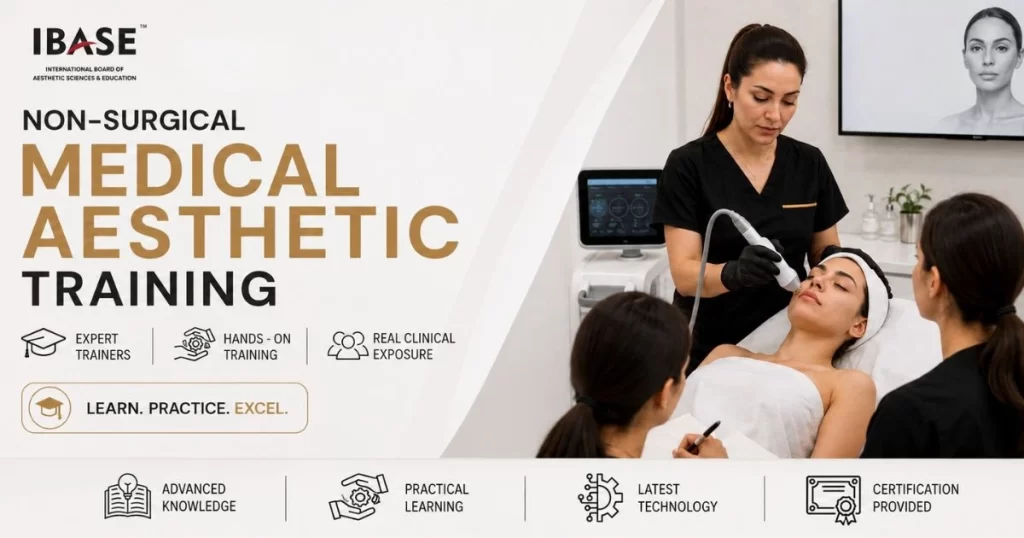
Depending on the course format, Non-Surgical Medical Aesthetic Training may include demonstrations, simulation-based exercises, case discussions, treatment planning, and supervised practical sessions. These experiences can help participants connect theoretical knowledge with clinical situations.
Hands-on learning also gives students the opportunity to receive feedback from experienced trainers. By identifying areas for improvement during training, participants can continue developing their skills in a supportive educational environment.
The Core Subjects Every Aesthetic Professional Should Understand
A comprehensive training program should cover multiple aspects of aesthetic practice rather than focusing exclusively on treatment techniques. The exact curriculum may vary according to the program and participants’ professional backgrounds.
Important areas of study may include:
- Facial Anatomy and Physiology
- Patient Consultation
- Facial Assessment
- Treatment Planning
- Dermal Filler Principles
- Botulinum Toxin Principles
- Injection Technique Fundamentals
- Product Knowledge
- Hygiene and Infection Control
- Patient Selection
- Contraindications
- Informed Consent
- Complication Awareness and Management
- Aftercare Guidance
- Medical Photography
- Professional Ethics
Together, these subjects can create a more complete educational experience. Therefore, professionals considering Non-Surgical Medical Aesthetic Training should carefully review the curriculum before selecting a course.
Patient Consultation: Where Successful Treatment Really Begins
An aesthetic treatment begins long before any procedure takes place. A thorough consultation helps the practitioner understand the patient’s concerns, expectations, relevant medical history, and treatment goals.
During Non-Surgical Medical Aesthetic Training, participants should learn how to communicate clearly and professionally with patients. They should also understand the importance of setting realistic expectations and explaining potential benefits, limitations, risks, and aftercare requirements.
Moreover, effective consultation requires listening skills. Patients may arrive with specific requests, but a professional assessment may identify different considerations. Therefore, practitioners need to balance patient preferences with responsible clinical judgment.
Natural Results Over Trends: The Art Behind Aesthetic Medicine
Social media has influenced aesthetic trends significantly. However, responsible aesthetic practice should not simply follow every popular look or treatment trend.
Each patient has unique facial features, proportions, concerns, and goals. Consequently, treatment planning should focus on individualized assessment rather than applying the same approach to everyone.
Quality Non-Surgical Medical Aesthetic Training encourages practitioners to understand facial balance and develop treatment plans based on individual needs. The objective should be to make informed clinical decisions while maintaining realistic expectations and respecting patient preferences.
Patient Safety: The Standard That Cannot Be Compromised
Patient safety should remain at the center of every aesthetic procedure. Even minimally invasive treatments can involve risks and potential complications.
Therefore, Non-Surgical Medical Aesthetic Training should address topics such as patient selection, contraindications, infection control, documentation, consent, emergency awareness, and complication management.
Practitioners should understand both common and serious potential complications associated with the procedures they perform. Furthermore, they need appropriate protocols for identifying concerns and responding within their professional scope and local regulatory requirements.
Who Should Consider Non-Surgical Medical Aesthetic Training?
Eligibility for aesthetic training depends on the course requirements, local regulations, and professional scope of practice. Therefore, prospective students should verify that a program is appropriate for their qualifications before enrolling.
Depending on these requirements, participants may include:
- Doctors
- Dentists
- Dermatologists
- Plastic Surgeons
- Nurses
- Other Eligible Healthcare Professionals
For qualified participants, Non-Surgical Medical Aesthetic Training may provide an opportunity to expand existing clinical knowledge and explore professional development within aesthetic medicine.
However, completing a course does not replace the need to comply with applicable licensing, regulatory, insurance, and professional requirements.
Why Nasr City, Cairo Is Becoming Important for Aesthetic Education
Nasr City offers a convenient location within Cairo for healthcare professionals seeking specialized education. The area is known for its medical facilities, educational centers, businesses, and accessibility from different parts of the city.
For professionals in Egypt and the wider region, choosing aesthetic education in Nasr City can reduce the need for international travel while providing access to specialized training opportunities closer to home.
Additionally, studying in a professional learning environment allows participants to connect with trainers and other healthcare professionals. Consequently, Non-Surgical Medical Aesthetic Training can support both skill development and professional networking.
Career Development in a Changing Aesthetic Industry
The growth of aesthetic medicine has created new professional development opportunities for qualified healthcare practitioners. However, long-term success requires more than completing one training course.
Practitioners need to continue learning, stay informed about developments in their field, follow applicable professional standards, and maintain a strong commitment to patient care.
Non-Surgical Medical Aesthetic Training can provide an important educational foundation. From there, professionals may continue developing through advanced courses, workshops, mentoring, clinical experience, and ongoing education.
As a result, practitioners can gradually build their knowledge while adapting to changes in aesthetic medicine.
Choosing the Right Aesthetic Training Program
Not all training programs provide the same educational experience. Therefore, prospective students should carefully compare course content, trainers, practical components, and eligibility requirements.
Before enrolling, consider asking:
- Who is eligible to attend the course?
- What topics does the curriculum cover?
- Does the program include anatomy education?
- Are practical sessions available?
- Who delivers the training?
- How does the course address patient safety?
- Does it cover complication awareness?
- What certification is provided?
- Are advanced training opportunities available?
- Does the program comply with relevant professional requirements?
By asking these questions, professionals can make more informed choices when selecting Non-Surgical Medical Aesthetic Training.
Why Choose Ibase for Medical Aesthetic Training?
Ibase focuses on aesthetic education designed to support the professional development of eligible healthcare practitioners. Through structured learning, participants can explore important areas of non-surgical aesthetic medicine.
The training approach emphasizes knowledge, practical learning, patient assessment, anatomy, safety considerations, and professional development. Students can learn in an educational environment designed to connect theoretical principles with relevant practical applications.
Depending on the selected course, participants may explore areas such as fillers, botulinum toxin, facial assessment, anatomy, treatment planning, and other aesthetic subjects.
For healthcare professionals seeking Non-Surgical Medical Aesthetic Training in Nasr City, Cairo, Ibase provides an opportunity to develop relevant knowledge and explore further education in the evolving field of aesthetic medicine.
Aesthetic Education Is a Journey, Not a One-Day Destination
The aesthetic industry often changes as new research, techniques, technologies, and products emerge. Therefore, professional development should continue beyond the completion of an initial course.
Practitioners can benefit from reviewing their knowledge, attending advanced training, participating in professional discussions, and learning from appropriate clinical experience.
Ultimately, Non-Surgical Medical Aesthetic Training can serve as an important step in a longer educational journey. The strongest professionals remain committed to continuous improvement, responsible practice, and patient-centered care.
Conclusion: Build Skills Today for the Future of Aesthetic Medicine
Non-surgical aesthetic medicine offers an evolving field of professional opportunities for appropriately qualified healthcare practitioners. However, effective practice requires more than an interest in beauty treatments.
Professionals need knowledge of anatomy, consultation, assessment, treatment planning, patient safety, ethical practice, and complication awareness. Therefore, choosing comprehensive Non-Surgical Medical Aesthetic Training can help participants establish a stronger educational foundation.
At Ibase, healthcare professionals can explore aesthetic education in Nasr City, Cairo, within a structured learning environment. For those ready to develop their knowledge and continue their professional journey, quality education can provide an important starting point.
Frequently Asked Questions
1. What is Non-Surgical Medical Aesthetic Training?
Non-Surgical Medical Aesthetic Training is professional education that may cover subjects such as facial anatomy, patient assessment, treatment planning, fillers, botulinum toxin, patient safety, and complication awareness.
2. Who can join Non-Surgical Medical Aesthetic Training?
Eligibility depends on the course, local regulations, and professional requirements. Programs may be available to doctors, dentists, nurses, dermatologists, and other eligible healthcare professionals.
3. Does aesthetic training include practical sessions?
The practical components vary between programs. Some courses may include demonstrations, simulations, case discussions, and supervised practical learning.
4. Why is facial anatomy important in aesthetic medicine?
A detailed understanding of facial anatomy helps practitioners make more informed treatment decisions and understand potential risks associated with aesthetic procedures.
5. What should I check before choosing an aesthetic training course?
Review trainer qualifications, curriculum content, practical learning opportunities, anatomy education, patient safety modules, complication awareness, eligibility requirements, and certification details.
6. Can aesthetic training help with career development?
For eligible healthcare professionals, aesthetic training may provide additional knowledge and skills that support further professional development in the field.
7. Why choose Nasr City for aesthetic training?
Nasr City is a well-connected area of Cairo with access to healthcare facilities, educational centers, and professional communities.
8. Why choose Ibase for Non-Surgical Medical Aesthetic Training?
Ibase provides structured aesthetic education for eligible healthcare professionals, with a focus on relevant knowledge, practical learning, anatomy, patient assessment, and safety considerations.
Visit www.ibase.info.com or contact IBASE to book your seat.
- Scar Subcision Course Training: Master Advanced Scar Correction Techniques with IBASE
- Best Aesthetic Academy in Egypt: A Complete Guide to Choosing the Right Training Institute
- Aesthetic Anatomy Course Egypt: Master the Anatomy Behind Safe & Precise Aesthetic Practice
- Microneedling Course in Egypt: Build Practical Skills for Modern Skin Rejuvenation
- ACP Face Rejuvenation Training: Master the Art of Modern Facial Rejuvenation
- Scar Subcision Course in Egypt: Master the Science of Acne Scar Correction with Confidence
- PRP Training Course in Egypt: Build Practical Skills for Modern Aesthetic Practice
- Cosmetic Botox Course in Egypt: A Practical Path to Modern Aesthetic Training
- Advance Your Aesthetic Career with a PDRN Training Course in Egypt
- Advance Your Aesthetic Career with a Scalp Threads Course in Egypt
- Unlock Your Aesthetic Expertise with Mono Threads Training in Egypt
- Master Advanced Aesthetic Techniques with Advanced Botox and Fillers Training in Egypt
- Elevate Your Aesthetic Career with PDO Thread Lift Training in Egypt: A Complete Guide for Medical Professionals
- Beyond the Scalpel: How Non-Surgical Medical Aesthetic Training Is Shaping the Future of Aesthetic Practice
- Thread Lift Certification in Nasr City Egypt: Master the Art of Non-Surgical Facial Rejuvenation with IBASE
- Skin Booster Training in Nasr City Egypt: Transform Your Aesthetic Career with Hands-On Professional Learning
- Cosmetic Botox Course in Egypt: Transform Your Career with Advanced Aesthetic Training
- Sculpting Confidence: Why HA Fillers Training in Nasr City Egypt Is the Gateway to a Thriving Aesthetic Career
- The Art of Aging Backward: Why Biostimulatory Fillers in Nasr City Are Transforming Modern Aesthetic Treatments
- IV Excellence Starts Here: Your Complete Guide to IV Infusion Therapy Training in Nasr City
- Turn Back Time Gracefully: The Complete Guide to Neck Rejuvenation in Nasr City
- Mastering Skin Transformation: The Rising Demand for Chemical Peel Training in Nasr City
- Glow Beyond Time: The Ultimate Guide to Facial Rejuvenation Training in Nasr City
- Sculpting Time: Mastering Facial Balance with Temporal Fillers Training in Nasr City
- Hybrid Fillers Training in Nasr City: A Comprehensive Guide (2026)
- Mastering Precision: The Ultimate Guide to Injectors Anatomy Training in Nasr City
- Sculpting Confidence: The Ultimate Guide to Lip Fillers Training
- Chin & Cheeks Filler Training in Nasr City, Cairo – Elevate Your Aesthetic Career with IBASE
- Advanced Botox Course in Nasr City – Complete Guide for Aesthetic Professionals
- A Complete Guide to Botox and Fillers Certification for Medical Professionals
- Lift, Tighten & Rejuvenate Your Skin Without Surgery or Long Recovery
- Best Lip Filler Training Professional Aesthetic Course in Cairo, EGYPT | iBase
- Best Non Invasive Tummy Fat Removal
- Best Non Surgical Body Sculpting in Cairo, Egypt (Nasr City) – iBase
- Top Stomach Contouring Non Surgical in Cairo, Egypt Nasr City
- Best Non Invasive Fat Removal in Cairo, Egypt Nasr City | ibase
- Best Stomach Contouring Non Surgical in Cairo, Egypt – Safe, Modern Body Shaping by IBASE
- Best Non Invasive Body Contouring in Cairo, Egypt (Nasr City)
- Professional Aesthetic Training Programs in AL Karama, Dubai
- Non Surgical Body Contouring in Cairo, EGYPT | IBASE
- Best Foundation Aesthetic Training in AL Karama, Dubai | IBASE
- Top Skills You Learn in Advanced Aesthetic Training Programs
- How Aesthetic Training Boosts Your Career in the Beauty & Wellness Industry
Need Any Help?
House No.100, New Rajdhani Enclave Preet Vihar, New Delhi – 110092, India
