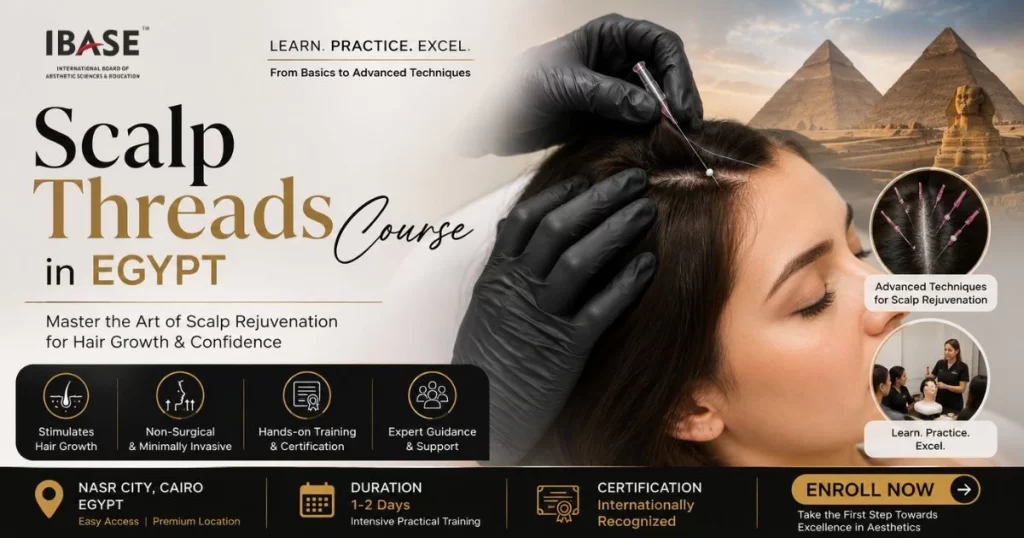
Advance Your Aesthetic Career with a Scalp Threads Course in Egypt
Author: IBASE Team
Reviewed by: Mohit (15+ Years Experience)
The field of medical aesthetics is constantly evolving, and practitioners are increasingly seeking advanced techniques that support minimally invasive aesthetic treatments. Among the emerging educational interests in aesthetic medicine is scalp thread training, which focuses on understanding thread-based approaches within scalp and hair-related aesthetic procedures. As patient demand for innovative non-surgical aesthetic options continues to grow, healthcare professionals are looking for specialized education that combines anatomy, safety, consultation skills, and practical clinical understanding.
If you are searching for a Scalp Threads Course in Egypt, choosing a structured and professionally designed program is essential. A quality course should provide a strong theoretical foundation, hands-on learning opportunities, patient assessment training, and a clear understanding of safety protocols. At Ibase, eligible healthcare professionals receive advanced aesthetic education designed to support responsible practice, clinical confidence, and continuous professional development.
Why Advanced Aesthetic Education Is More Important Than Ever
Modern patients expect aesthetic practitioners to deliver personalized, evidence-informed treatments with a high standard of safety and professionalism. As a result, continuing education has become a crucial part of every successful aesthetic career. Healthcare professionals who invest in advanced training are better prepared to understand evolving techniques, patient expectations, and ethical treatment planning.
A Scalp Threads Course in Egypt allows practitioners to expand their knowledge of scalp-related aesthetic procedures while strengthening their understanding of anatomy, consultation methods, treatment planning, and patient care. Rather than focusing solely on technical skills, comprehensive education encourages practitioners to approach aesthetic treatments with greater clinical awareness and responsibility.
What Is a Scalp Threads Course in Egypt?
A Scalp Threads Course in Egypt is a professional educational program designed for eligible healthcare practitioners who wish to develop their understanding of thread-based scalp aesthetic procedures. The course typically combines theoretical instruction with supervised practical learning to help participants build confidence in patient assessment and procedural planning.
Training programs may include topics such as scalp anatomy, patient consultation, treatment indications, contraindications, procedural principles, sterile techniques, safety considerations, and post-treatment care. The emphasis is placed on understanding the procedure within the broader context of medical aesthetics and responsible clinical practice.
Why Egypt Is Becoming a Leading Destination for Aesthetic Training
Egypt has emerged as an important regional center for medical aesthetic education, attracting healthcare professionals from the Middle East, Africa, and neighboring countries. Modern training facilities, experienced faculty, and structured educational programs have contributed to its growing reputation in advanced aesthetic training.
For many practitioners, enrolling in a Scalp Threads Course in Egypt offers access to internationally relevant education without the need for long-distance international travel. In addition, Egypt provides opportunities to learn alongside professionals from diverse backgrounds, creating a collaborative and enriching educational environment.
Understanding Scalp Anatomy: The Foundation of Safe Practice
Any scalp-related aesthetic procedure requires a thorough understanding of scalp anatomy. The scalp contains multiple tissue layers, blood vessels, nerves, connective tissues, and hair-bearing structures that must be carefully considered during patient assessment and treatment planning.
During a Scalp Threads Course in Egypt, participants study the anatomical structures of the scalp to better understand tissue characteristics, vascular considerations, and individual anatomical variations. This knowledge supports safer clinical decision-making and reinforces the importance of personalized patient assessment rather than standardized treatment approaches.
What You Will Learn During the Course
A comprehensive scalp thread training program should provide a balanced combination of theory and practical education. Participants develop both scientific understanding and clinical awareness related to scalp aesthetic procedures.
Typical learning areas include:
- Scalp Anatomy
- Hair and Scalp Assessment
- Patient Consultation
- Medical History Evaluation
- Treatment Planning
- Sterile Technique Principles
- Thread Material Overview
- Procedural Concepts
- Safety Protocols
- Contraindications
- Patient Communication
- Clinical Documentation
- Post-Treatment Care
- Ethical Practice in Aesthetic Medicine
By covering these essential topics, a Scalp Threads Course in Egypt helps practitioners build a stronger foundation for safe and professional aesthetic practice.
Hands-On Training Builds Clinical Confidence
Theoretical knowledge is essential, but practical education plays a critical role in helping practitioners apply what they learn in real clinical settings. Supervised practical sessions allow participants to observe procedural techniques, practice assessment skills, and receive feedback from experienced trainers.
Depending on the course structure and participant eligibility, a Scalp Threads Course in Egypt may include live demonstrations, supervised practical workshops, case discussions, treatment planning exercises, and faculty-guided learning sessions. These experiences help bridge the gap between classroom education and clinical application while promoting safe and responsible practice.
Safety and Complication Awareness Must Always Come First
Like all medical aesthetic procedures, scalp-related treatments require careful attention to safety. Comprehensive training programs emphasize the importance of patient selection, sterile technique, contraindication screening, and early recognition of potential complications.
Key safety topics often include:
- Infection Prevention
- Sterile Field Preparation
- Patient Selection Criteria
- Contraindications
- Risk Assessment
- Clinical Documentation
- Post-Treatment Monitoring
- Patient Aftercare Instructions
- Emergency Preparedness Principles
- Professional Communication
Learning these principles during a Scalp Threads Course in Egypt helps practitioners approach treatments with greater confidence and clinical responsibility.
Who Can Join a Scalp Threads Course in Egypt?
Eligibility requirements vary depending on local regulations and the training provider’s policies. Courses are generally intended for licensed healthcare professionals who are authorized to perform aesthetic procedures within their jurisdiction.
Eligible participants may include:
- Medical Doctors
- Dermatologists
- Plastic Surgeons
- Dentists
- Nurses
- Other Licensed Healthcare Professionals (where permitted)
Before enrolling in a Scalp Threads Course in Egypt, practitioners should verify that they meet both the course admission requirements and the regulatory guidelines applicable in their country of practice.
How to Choose the Right Training Program
Not all aesthetic training programs provide the same level of education or clinical support. Before selecting a course, healthcare professionals should carefully evaluate the quality and structure of the program.
Consider the following factors:
- Experienced Faculty
- Comprehensive Curriculum
- Anatomy-Focused Education
- Hands-On Practical Sessions
- Patient Safety Emphasis
- Small Group Learning Environment
- Clinical Case Discussions
- Post-Course Educational Support
- Professional Training Facilities
- Ethical Approach to Aesthetic Education
Choosing a well-structured Scalp Threads Course in Egypt can provide lasting educational value and support long-term professional development.
Why Choose Ibase?
Ibase is dedicated to providing advanced medical aesthetic education for eligible healthcare professionals who wish to strengthen their clinical expertise and expand their understanding of modern aesthetic procedures. Training programs are designed to combine scientific knowledge with supervised practical learning in a professional educational environment.
Why Healthcare Professionals Choose Ibase
- Advanced Aesthetic Curriculum
- Experienced Medical Faculty
- Anatomy-Based Training
- Hands-On Practical Education
- Patient Safety Focus
- Modern Training Facilities
- Small Batch Learning
- Clinical Case Discussions
- Professional Development Support
- International Learning Community
For practitioners seeking a Scalp Threads Course in Egypt, Ibase offers structured education designed to promote clinical confidence, responsible practice, and continuous professional growth.
The Future of Scalp Aesthetic Procedures
As interest in minimally invasive aesthetic treatments continues to grow, scalp-related aesthetic procedures are attracting increasing attention within the broader field of aesthetic medicine. Future advancements are likely to place even greater emphasis on evidence-based practice, patient safety, anatomical precision, and individualized treatment planning.
Practitioners who invest in high-quality education today will be better prepared to adapt to future developments while maintaining professional standards and ethical clinical practice. A Scalp Threads Course in Egypt provides an opportunity to build foundational knowledge that supports ongoing learning and professional advancement in the evolving world of medical aesthetics.
Conclusion: Build Your Expertise Through Professional Training
Success in aesthetic medicine requires more than technical ability. It requires anatomical knowledge, patient-centered communication, ethical decision-making, safety awareness, and a commitment to lifelong learning. Specialized education helps practitioners develop these essential competencies while expanding their understanding of emerging aesthetic procedures.
A comprehensive Scalp Threads Course in Egypt can help eligible healthcare professionals strengthen their clinical foundation, improve consultation skills, and gain valuable insight into scalp-related aesthetic treatments. At Ibase, participants receive structured education designed to support professional growth, patient safety, and long-term success in the dynamic field of aesthetic medicine.
Frequently Asked Questions (FAQ)
- What is a Scalp Threads Course in Egypt?
It is a professional educational program for eligible healthcare professionals covering scalp anatomy, patient assessment, treatment planning, safety protocols, procedural principles, and practical aesthetic education.
- Who can enroll in the course?
Eligibility depends on local regulations and course requirements. Programs are generally intended for licensed healthcare professionals such as doctors, dentists, dermatologists, plastic surgeons, nurses, and other eligible practitioners.
- Does the course include hands-on training?
Many training programs include supervised practical sessions, live demonstrations, case discussions, and treatment planning workshops, depending on the curriculum and participant eligibility.
- Why is scalp anatomy important?
Understanding scalp anatomy helps practitioners perform thorough assessments, recognize anatomical variations, and support safer treatment planning and clinical decision-making.
- Does the course cover patient safety?
Yes. Comprehensive programs typically include sterile technique, infection prevention, patient selection, contraindications, documentation, complication awareness, and aftercare principles.
- Is previous aesthetic experience required?
Prerequisites vary depending on the training provider. Applicants should review the course eligibility requirements before enrolling.
- Why choose Ibase?
Ibase offers anatomy-based education, experienced faculty, hands-on practical learning, modern training facilities, and a strong emphasis on patient safety and professional development.
- Can this training support career development?
Continuing education can help eligible healthcare professionals expand their knowledge, strengthen clinical skills, and support ongoing professional development within the scope of their qualifications and local regulations.
Visit www.ibase.info.com or contact IBASE to book your seat.
- Aesthetic Anatomy Course Egypt: Master the Anatomy Behind Safe & Precise Aesthetic Practice
- Microneedling Course in Egypt: Build Practical Skills for Modern Skin Rejuvenation
- ACP Face Rejuvenation Training: Master the Art of Modern Facial Rejuvenation
- Scar Subcision Course in Egypt: Master the Science of Acne Scar Correction with Confidence
- PRP Training Course in Egypt: Build Practical Skills for Modern Aesthetic Practice
- Cosmetic Botox Course in Egypt: A Practical Path to Modern Aesthetic Training
- Advance Your Aesthetic Career with a PDRN Training Course in Egypt
- Advance Your Aesthetic Career with a Scalp Threads Course in Egypt
- Unlock Your Aesthetic Expertise with Mono Threads Training in Egypt
- Master Advanced Aesthetic Techniques with Advanced Botox and Fillers Training in Egypt
- Elevate Your Aesthetic Career with PDO Thread Lift Training in Egypt: A Complete Guide for Medical Professionals
- Beyond the Scalpel: How Non-Surgical Medical Aesthetic Training Is Shaping the Future of Aesthetic Practice
- Thread Lift Certification in Nasr City Egypt: Master the Art of Non-Surgical Facial Rejuvenation with IBASE
- Skin Booster Training in Nasr City Egypt: Transform Your Aesthetic Career with Hands-On Professional Learning
- Cosmetic Botox Course in Egypt: Transform Your Career with Advanced Aesthetic Training
- Sculpting Confidence: Why HA Fillers Training in Nasr City Egypt Is the Gateway to a Thriving Aesthetic Career
- The Art of Aging Backward: Why Biostimulatory Fillers in Nasr City Are Transforming Modern Aesthetic Treatments
- IV Excellence Starts Here: Your Complete Guide to IV Infusion Therapy Training in Nasr City
- Turn Back Time Gracefully: The Complete Guide to Neck Rejuvenation in Nasr City
- Mastering Skin Transformation: The Rising Demand for Chemical Peel Training in Nasr City
- Glow Beyond Time: The Ultimate Guide to Facial Rejuvenation Training in Nasr City
- Sculpting Time: Mastering Facial Balance with Temporal Fillers Training in Nasr City
- Hybrid Fillers Training in Nasr City: A Comprehensive Guide (2026)
- Mastering Precision: The Ultimate Guide to Injectors Anatomy Training in Nasr City
- Sculpting Confidence: The Ultimate Guide to Lip Fillers Training
- Chin & Cheeks Filler Training in Nasr City, Cairo – Elevate Your Aesthetic Career with IBASE
- Advanced Botox Course in Nasr City – Complete Guide for Aesthetic Professionals
- A Complete Guide to Botox and Fillers Certification for Medical Professionals
- Lift, Tighten & Rejuvenate Your Skin Without Surgery or Long Recovery
- Best Lip Filler Training Professional Aesthetic Course in Cairo, EGYPT | iBase
- Best Non Invasive Tummy Fat Removal
- Best Non Surgical Body Sculpting in Cairo, Egypt (Nasr City) – iBase
- Top Stomach Contouring Non Surgical in Cairo, Egypt Nasr City
- Best Non Invasive Fat Removal in Cairo, Egypt Nasr City | ibase
- Best Stomach Contouring Non Surgical in Cairo, Egypt – Safe, Modern Body Shaping by IBASE
- Best Non Invasive Body Contouring in Cairo, Egypt (Nasr City)
- Professional Aesthetic Training Programs in AL Karama, Dubai
- Non Surgical Body Contouring in Cairo, EGYPT | IBASE
- Best Foundation Aesthetic Training in AL Karama, Dubai | IBASE
- Top Skills You Learn in Advanced Aesthetic Training Programs
- How Aesthetic Training Boosts Your Career in the Beauty & Wellness Industry
Need Any Help?
House No.100, New Rajdhani Enclave Preet Vihar, New Delhi – 110092, India
