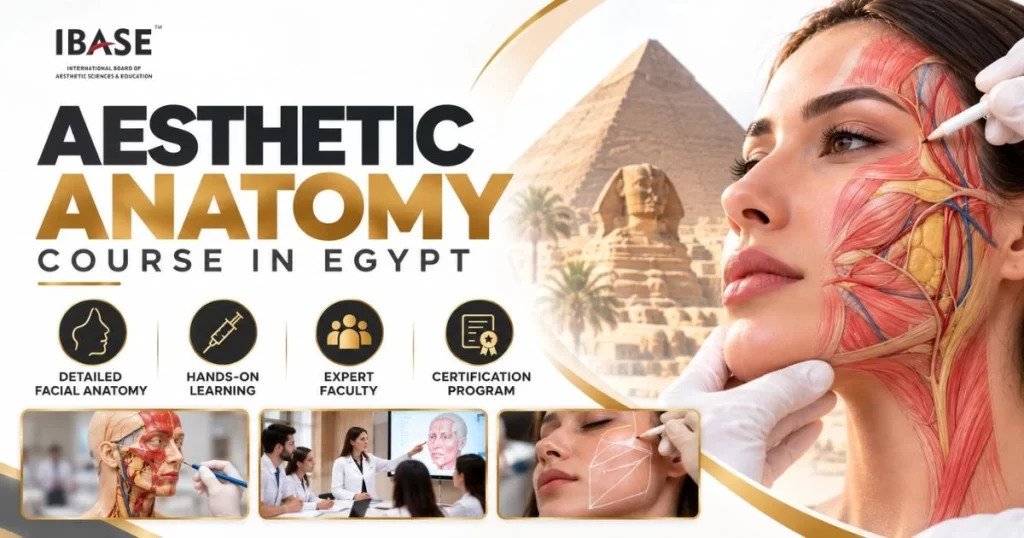
Aesthetic Anatomy Course Egypt: Master the Anatomy Behind Safe & Precise Aesthetic Practice
Author: IBASE Team
Reviewed by: Mohit (15+ Years Experience)
Modern aesthetic treatments demand more than technical confidence. They require a strong understanding of facial anatomy, tissue layers, vascular structures, muscles, nerves, and individual anatomical variations. For medical professionals entering or advancing in aesthetic medicine, anatomy forms the foundation on which safe treatment planning is built.
An Aesthetic Anatomy Course Egypt can help practitioners strengthen this essential knowledge through structured education, clinical discussion, and practical learning. At IBASE, aesthetic education can be approached with a strong focus on anatomy, treatment planning, patient assessment, and responsible clinical practice.
Why Facial Anatomy Matters in Aesthetic Medicine
Aesthetic procedures often involve working around highly sensitive and anatomically complex areas of the face. The skin, subcutaneous tissue, muscles, nerves, blood vessels, ligaments, and bone interact to create facial structure and movement. Therefore, understanding these relationships is essential before performing or planning aesthetic procedures.
Rather than viewing the face simply as a collection of treatment zones, practitioners need to understand how different structures connect. This approach can support more informed treatment planning and help practitioners recognize anatomical variations that may influence clinical decisions.
An Aesthetic Anatomy Course Egypt can provide a structured way to study these relationships while connecting anatomical knowledge with aesthetic applications.
What Is an Aesthetic Anatomy Course?
An aesthetic anatomy course focuses specifically on the anatomical knowledge relevant to cosmetic and aesthetic medicine. Traditional anatomy education provides a broad understanding of the human body, while aesthetic anatomy training concentrates more closely on facial structures and areas commonly involved in aesthetic procedures.
Depending on the curriculum, practitioners may study facial muscles, superficial and deep tissue planes, vascular anatomy, nerve pathways, retaining ligaments, fat compartments, facial skeleton, and anatomical landmarks. The objective is not simply to memorize structures but to understand their clinical relevance.
For professionals looking for an Aesthetic Anatomy Course Egypt, this type of focused education can complement practical training in injectables and other aesthetic procedures.
Understanding Facial Layers and Tissue Planes
One of the most important concepts in aesthetic anatomy is understanding the different layers of facial tissue. The face contains several anatomical planes, and each has distinct characteristics and structures. Understanding these layers can help practitioners develop a more accurate mental map of the treatment area.
For example, skin, subcutaneous tissue, fascia, muscles, and deeper structures have different relationships depending on the facial region. These relationships can also vary between individuals. Consequently, practitioners should avoid relying solely on a generalized anatomical model.
A structured Aesthetic Anatomy Course Egypt can help learners study these layers systematically and understand why anatomical depth matters when evaluating aesthetic treatment approaches.
Facial Muscles and Their Role in Aesthetic Treatments
Facial muscles contribute significantly to expression, movement, and facial appearance. Muscles around the forehead, eyes, nose, lips, and lower face interact in complex ways. Understanding their origin, insertion, function, and surrounding structures is therefore important for aesthetic practitioners.
For example, the muscles responsible for facial expression do not work independently. Their coordinated movement contributes to expressions such as smiling, frowning, squinting, and raising the eyebrows. Understanding these interactions provides useful context when studying treatments that influence muscle activity.
During an Aesthetic Anatomy Course Egypt, practitioners can explore these muscular relationships and connect anatomical concepts with common aesthetic treatment areas.
Vascular Anatomy: An Essential Part of Aesthetic Education
Vascular anatomy deserves particular attention in aesthetic medicine. Blood vessels travel through different facial regions, and their locations and patterns can vary between individuals. Consequently, practitioners need appropriate anatomical knowledge when assessing treatment areas.
Understanding arteries, veins, branches, and their relationships with surrounding structures can support better risk awareness. However, anatomy education should complement—not replace—appropriate clinical training, professional judgment, patient assessment, and established safety protocols.
A comprehensive Aesthetic Anatomy Course Egypt should therefore give meaningful attention to vascular structures and anatomical variations relevant to aesthetic practice.
Nerves, Sensory Structures, and Facial Movement
The facial region contains important sensory and motor nerves. These structures influence sensation and facial movement, making their anatomical relationships relevant to aesthetic procedures.
Learning where major nerve pathways travel can help practitioners develop a clearer understanding of facial anatomy. It can also encourage careful consideration of anatomical depth, treatment location, and individual variation during clinical assessment.
For this reason, nerve anatomy is an important component of an Aesthetic Anatomy Course Egypt. A good educational program should explain the structures in a clinically relevant and understandable way rather than treating anatomy as isolated textbook information.
Why Cadaveric and Practical Anatomy Learning Can Be Valuable
Whenever appropriately available and conducted under applicable regulations, practical anatomy education can provide a different learning experience from textbook study. Seeing three-dimensional anatomical relationships can help practitioners better understand how structures relate to one another.
Three-dimensional learning can be particularly valuable because facial anatomy is not flat. Structures overlap, change direction, and differ from one facial region to another. Practical demonstrations may therefore help learners develop stronger spatial awareness.
However, the exact format of an Aesthetic Anatomy Course Egypt varies between institutions. Prospective participants should review the curriculum carefully to understand whether the course includes lectures, models, imaging, demonstrations, cadaveric education, or other learning methods.
Connecting Anatomy With Aesthetic Treatment Planning
Anatomy becomes more meaningful when practitioners understand how it relates to patient assessment and treatment planning. Before considering any aesthetic procedure, practitioners should evaluate the patient’s facial characteristics, concerns, expectations, medical history, and suitability for the proposed treatment.
For example, two people may present with a similar aesthetic concern while having significantly different facial anatomy. Their tissue thickness, muscle activity, skeletal structure, fat distribution, and vascular patterns may differ. Therefore, a standardized approach may not be appropriate for every patient.
An Aesthetic Anatomy Course Egypt can help practitioners develop an anatomy-first mindset, encouraging them to understand the underlying structures before thinking about specific treatment techniques.
How Anatomy Knowledge Supports Responsible Practice
Good aesthetic practice requires more than knowing where a product or device is commonly used. Practitioners also need to understand contraindications, patient selection, informed consent, infection-control principles, complications, emergency protocols, and appropriate referral pathways.
Anatomy education supports this broader approach by giving practitioners a stronger foundation for recognizing important structures and understanding potential anatomical considerations. Nevertheless, completing an anatomy course does not automatically qualify someone to perform every aesthetic procedure.
Professional licensing, scope of practice, regulatory requirements, and procedure-specific training vary by country and profession. Therefore, participants should confirm that their education and clinical activities comply with applicable Egyptian regulations and professional requirements.
Who Can Benefit From an Aesthetic Anatomy Course in Egypt?
An anatomy-focused aesthetic program may be useful for appropriately qualified healthcare professionals who work in or are preparing to enter aesthetic medicine. The exact eligibility criteria depend on the training provider and the applicable professional regulations.
Professionals involved with aesthetic injectables, facial rejuvenation, dermatology, cosmetic medicine, or related fields may find advanced anatomy education particularly relevant. In addition, practitioners who already have clinical experience may use anatomy training to revisit foundational concepts from a more aesthetic-specific perspective.
Before enrolling in an Aesthetic Anatomy Course Egypt, prospective learners should check prerequisites, certification details, faculty qualifications, practical components, and whether the program matches their professional scope.
What to Look for When Choosing an Aesthetic Anatomy Course in Egypt
Not every anatomy course has the same structure. Therefore, comparing the curriculum is important. Look for a program that covers relevant facial anatomy rather than focusing only on general anatomical terminology.
Important areas to investigate include facial muscles, vascular anatomy, nerve pathways, tissue planes, fat compartments, ligaments, facial skeleton, anatomical variations, patient assessment, and clinical relevance. Practical or three-dimensional learning opportunities may also add value depending on the course format.
When evaluating an Aesthetic Anatomy Course Egypt, learners should also consider the faculty’s professional background, teaching experience, course duration, learning format, certification, and post-course educational support.
Learn With IBASE: Building a Stronger Anatomy Foundation
IBASE provides aesthetic education designed around the knowledge and skills relevant to modern aesthetic practice. An anatomy-focused course can help learners organize important anatomical concepts and understand their relevance to aesthetic procedures.
At IBASE, anatomy education can serve as a foundation for continued professional development. Instead of treating anatomy as something to study once and forget, practitioners can use it as an ongoing part of their clinical learning.
For professionals considering an Aesthetic Anatomy Course Egypt, reviewing the IBASE curriculum, faculty information, eligibility requirements, and practical learning structure can help determine whether the program aligns with their educational goals.
From Anatomy Knowledge to Continuous Professional Development
Aesthetic medicine continues to evolve, and professional education should evolve with it. New techniques, technologies, treatment approaches, and safety recommendations can influence clinical practice. Therefore, practitioners should continue learning even after completing a formal course.
Anatomy also deserves regular revision. With continued study, practitioners can strengthen their understanding of facial structures and develop a more detailed appreciation of anatomical variation.
An Aesthetic Anatomy Course Egypt can be one step within a broader professional development pathway. Combining anatomy education with procedure-specific training, clinical experience, complication management, and evidence-based learning can support responsible aesthetic practice.
Why Egypt Is an Important Location for Aesthetic Education
Egypt has developed a growing ecosystem of medical and aesthetic education, with training opportunities available in areas such as dermatology, aesthetic medicine, injectables, and facial anatomy. For professionals seeking specialized education, location can be one factor when comparing training options.
However, learners should look beyond the destination itself. The quality of education depends on the curriculum, instructors, practical exposure, educational resources, safety standards, and relevance to the participant’s professional background.
Therefore, when searching for an Aesthetic Anatomy Course Egypt, focus on what the course actually teaches and how that education fits into your existing clinical training.
Prepare for Your Aesthetic Anatomy Training
Before attending an anatomy course, learners can revise basic anatomy terminology and familiarize themselves with facial regions. Reviewing muscles, bones, major vessels, nerves, and tissue layers beforehand may make advanced discussions easier to follow.
It is also useful to prepare questions based on your clinical interests. For example, you might want to understand facial asymmetry, tissue planes, anatomical variations, or the relationship between different structures. Asking clinically focused questions can make the learning experience more interactive.
Most importantly, approach anatomy as a three-dimensional subject. The ability to visualize how structures relate to each other can be just as important as remembering their names.
The Long-Term Value of Strong Anatomy Knowledge
Aesthetic medicine combines science, clinical assessment, technical skills, and patient communication. Among these foundations, anatomy plays a central role because treatment decisions ultimately involve the human body.
Strong anatomical knowledge can help practitioners approach aesthetic procedures with greater awareness of facial structures and individual variation. It can also provide a foundation for understanding why treatment strategies need to be adapted to each patient.
An Aesthetic Anatomy Course Egypt therefore represents more than another certificate. When integrated with appropriate clinical training and professional practice, anatomy education can become a long-term part of an aesthetic practitioner’s learning journey.
Frequently Asked Questions
- What is an Aesthetic Anatomy Course Egypt?
An Aesthetic Anatomy Course Egypt is specialized education focused on facial anatomy relevant to aesthetic medicine, including muscles, vessels, nerves, tissue planes, fat compartments, ligaments, and facial structures.
- Who should take an aesthetic anatomy course?
Eligibility depends on the training provider and applicable regulations. Such courses are generally intended for appropriately qualified healthcare professionals involved in or preparing for aesthetic practice.
- Why is anatomy important in aesthetic medicine?
Facial anatomy helps practitioners understand the location and relationships of important structures. This knowledge can support informed patient assessment, treatment planning, and risk awareness.
- Does an anatomy course qualify me to perform aesthetic procedures?
Not necessarily. An anatomy course provides educational knowledge but does not automatically establish professional authorization or competency for every procedure. Procedure-specific training and applicable licensing requirements should also be considered.
- What topics are usually covered?
Topics may include facial muscles, vascular anatomy, nerve pathways, tissue planes, fat compartments, ligaments, facial skeleton, anatomical variations, and the clinical relevance of these structures.
- Is practical anatomy included in every course?
No. Course formats differ. Some programs may include models, imaging, demonstrations, practical sessions, or cadaveric anatomy education. Always review the specific curriculum before enrollment.
- Why choose IBASE for aesthetic anatomy education?
IBASE focuses on aesthetic education and can provide structured learning around anatomy and its relevance to modern aesthetic practice. Prospective learners should review the current course curriculum and eligibility requirements before enrolling.
- Can beginners join an aesthetic anatomy course?
That depends on the course prerequisites. Some programs may be designed for healthcare professionals with existing clinical knowledge, while others may provide more foundational instruction.
- How can I choose the right Aesthetic Anatomy Course in Egypt?
Compare the curriculum, faculty, eligibility criteria, practical learning opportunities, certification, course duration, safety education, and relevance to your professional scope before making a decision.
Visit www.ibase.info.com or contact IBASE to book your seat.
- Aesthetic Anatomy Course Egypt: Master the Anatomy Behind Safe & Precise Aesthetic Practice
- Microneedling Course in Egypt: Build Practical Skills for Modern Skin Rejuvenation
- ACP Face Rejuvenation Training: Master the Art of Modern Facial Rejuvenation
- Scar Subcision Course in Egypt: Master the Science of Acne Scar Correction with Confidence
- PRP Training Course in Egypt: Build Practical Skills for Modern Aesthetic Practice
- Cosmetic Botox Course in Egypt: A Practical Path to Modern Aesthetic Training
- Advance Your Aesthetic Career with a PDRN Training Course in Egypt
- Advance Your Aesthetic Career with a Scalp Threads Course in Egypt
- Unlock Your Aesthetic Expertise with Mono Threads Training in Egypt
- Master Advanced Aesthetic Techniques with Advanced Botox and Fillers Training in Egypt
- Elevate Your Aesthetic Career with PDO Thread Lift Training in Egypt: A Complete Guide for Medical Professionals
- Beyond the Scalpel: How Non-Surgical Medical Aesthetic Training Is Shaping the Future of Aesthetic Practice
- Thread Lift Certification in Nasr City Egypt: Master the Art of Non-Surgical Facial Rejuvenation with IBASE
- Skin Booster Training in Nasr City Egypt: Transform Your Aesthetic Career with Hands-On Professional Learning
- Cosmetic Botox Course in Egypt: Transform Your Career with Advanced Aesthetic Training
- Sculpting Confidence: Why HA Fillers Training in Nasr City Egypt Is the Gateway to a Thriving Aesthetic Career
- The Art of Aging Backward: Why Biostimulatory Fillers in Nasr City Are Transforming Modern Aesthetic Treatments
- IV Excellence Starts Here: Your Complete Guide to IV Infusion Therapy Training in Nasr City
- Turn Back Time Gracefully: The Complete Guide to Neck Rejuvenation in Nasr City
- Mastering Skin Transformation: The Rising Demand for Chemical Peel Training in Nasr City
- Glow Beyond Time: The Ultimate Guide to Facial Rejuvenation Training in Nasr City
- Sculpting Time: Mastering Facial Balance with Temporal Fillers Training in Nasr City
- Hybrid Fillers Training in Nasr City: A Comprehensive Guide (2026)
- Mastering Precision: The Ultimate Guide to Injectors Anatomy Training in Nasr City
- Sculpting Confidence: The Ultimate Guide to Lip Fillers Training
- Chin & Cheeks Filler Training in Nasr City, Cairo – Elevate Your Aesthetic Career with IBASE
- Advanced Botox Course in Nasr City – Complete Guide for Aesthetic Professionals
- A Complete Guide to Botox and Fillers Certification for Medical Professionals
- Lift, Tighten & Rejuvenate Your Skin Without Surgery or Long Recovery
- Best Lip Filler Training Professional Aesthetic Course in Cairo, EGYPT | iBase
- Best Non Invasive Tummy Fat Removal
- Best Non Surgical Body Sculpting in Cairo, Egypt (Nasr City) – iBase
- Top Stomach Contouring Non Surgical in Cairo, Egypt Nasr City
- Best Non Invasive Fat Removal in Cairo, Egypt Nasr City | ibase
- Best Stomach Contouring Non Surgical in Cairo, Egypt – Safe, Modern Body Shaping by IBASE
- Best Non Invasive Body Contouring in Cairo, Egypt (Nasr City)
- Professional Aesthetic Training Programs in AL Karama, Dubai
- Non Surgical Body Contouring in Cairo, EGYPT | IBASE
- Best Foundation Aesthetic Training in AL Karama, Dubai | IBASE
- Top Skills You Learn in Advanced Aesthetic Training Programs
- How Aesthetic Training Boosts Your Career in the Beauty & Wellness Industry
Need Any Help?
House No.100, New Rajdhani Enclave Preet Vihar, New Delhi – 110092, India
