Cosmetic Botox Course in Egypt: A Practical Path to Modern Aesthetic Training
Author: IBASE Team
Reviewed by: Mohit (15+ Years Experience)
The field of aesthetic medicine continues to evolve as patients increasingly seek minimally invasive treatments that enhance facial appearance while maintaining natural-looking results. Among these treatments, botulinum toxin has become one of the most widely used aesthetic procedures. However, successful treatment requires much more than knowing where to inject. Practitioners need a strong understanding of facial anatomy, patient assessment, treatment planning, product handling, safety, and appropriate clinical decision-making.
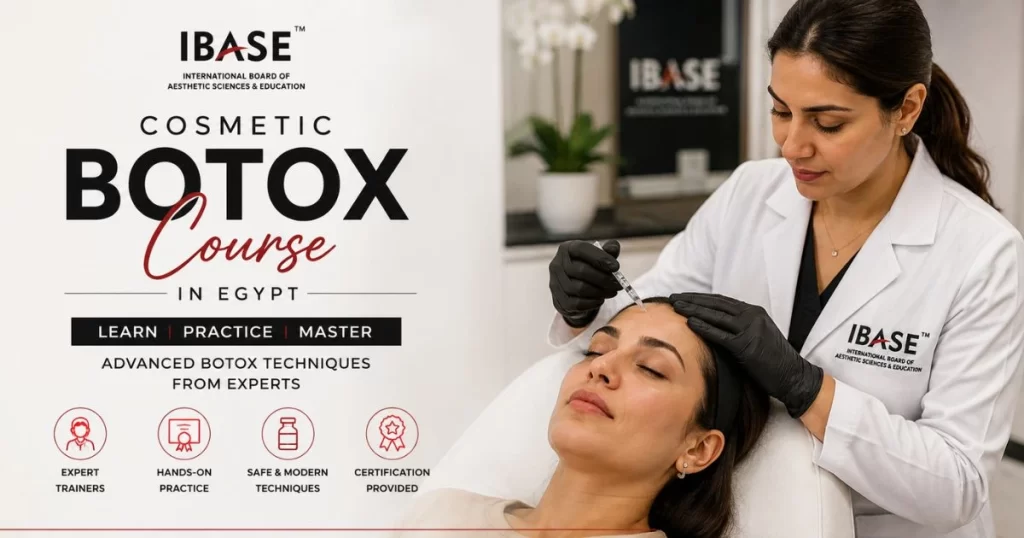
A Cosmetic Botox Course in Egypt can provide medical professionals with an opportunity to develop these essential skills through structured education and practical learning. Egypt has become an increasingly attractive destination for aesthetic medical education because it combines experienced medical professionals, specialized training environments, and access to a growing aesthetic medicine community.
At IBASE, aesthetic education focuses on helping practitioners understand modern non-surgical treatments through a combination of theoretical knowledge and supervised practical training.
Why Botox Training Matters in Modern Aesthetic Medicine
Botulinum toxin treatments may appear simple from the outside, but achieving consistent and natural-looking results requires detailed anatomical knowledge. Facial muscles interact with each other in complex ways, and treatment decisions can affect facial expressions, symmetry, and overall appearance.
For this reason, a Cosmetic Botox Course in Egypt should focus on clinical reasoning rather than simply teaching injection points. Practitioners benefit from learning how to assess facial movement, identify treatment goals, understand contraindications, and select appropriate techniques for individual patients.
Why Choose Egypt for Cosmetic Botox Education?
Egypt offers an increasingly active environment for medical aesthetic education. The country has a growing aesthetic medicine sector, experienced medical professionals, and training opportunities designed for practitioners interested in developing specialized skills.
Additionally, studying in Egypt can expose participants to different patient profiles and aesthetic preferences. This broader experience can help practitioners understand how treatment planning should remain individualized rather than relying on a one-size-fits-all approach.
A Cosmetic Botox Course in Egypt can therefore combine professional education with an opportunity to learn within an evolving aesthetic medicine market.
What Does a Cosmetic Botox Course Usually Cover?
A comprehensive Botox course should introduce participants to both foundational concepts and practical clinical considerations. Instead of focusing only on injection techniques, effective training explores the complete treatment journey.
Common educational topics may include:
- Botulinum toxin fundamentals
- Facial anatomy
- Facial muscle dynamics
- Patient consultation
- Treatment planning
- Product preparation and handling
- Injection safety
- Facial assessment
- Treatment indications
- Contraindications and precautions
- Managing expectations
- Possible complications
- Follow-up considerations
- Documentation and professional practice
Through a structured Cosmetic Botox Course in Egypt, practitioners can develop a stronger understanding of how these concepts work together during aesthetic consultations and treatment planning.
Facial Anatomy: The Foundation of Safe Botox Practice
Anatomy is one of the most important components of aesthetic medicine education. The face contains numerous muscles, nerves, vessels, and anatomical structures that vary between individuals. Understanding these structures helps practitioners make informed clinical decisions.
During a Cosmetic Botox Course in Egypt, participants can study facial muscles and their functions in relation to common aesthetic treatment areas. This knowledge can help practitioners understand facial movement and appreciate why treatment approaches must be customized for each patient.
Rather than memorizing injection locations, practitioners should learn to assess the face as a dynamic structure. This functional approach supports better treatment planning and encourages safer, more thoughtful aesthetic practice.
Patient Assessment Comes Before Treatment
A successful aesthetic treatment begins with an effective consultation. Before considering any procedure, practitioners need to understand the patient’s concerns, expectations, medical history, previous aesthetic treatments, and desired outcome.
A professional Cosmetic Botox Course in Egypt can teach participants how to approach patient consultations systematically. This includes assessing facial symmetry, observing muscle activity, identifying realistic treatment goals, and discussing potential outcomes.
Patient communication is equally important. A practitioner should explain what a treatment can realistically achieve while avoiding unrealistic promises. Clear communication helps establish trust and supports informed decision-making.
Learning Injection Techniques Responsibly
Practical education is an important component of professional aesthetic training. However, injection techniques should always be taught within appropriate medical, legal, and safety frameworks by qualified professionals.
During structured training, participants may learn how practitioners approach common aesthetic treatment areas, how facial anatomy influences technique selection, and how treatment plans are adapted according to individual patient characteristics.
A quality Cosmetic Botox Course in Egypt should emphasize that technique is not simply about needle placement. It involves assessment, anatomical understanding, product knowledge, appropriate dosing principles, patient selection, and careful follow-up.
Understanding Natural-Looking Aesthetic Results
Modern aesthetic medicine has increasingly shifted toward subtle enhancement rather than exaggerated results. Patients often want to look refreshed while maintaining their natural facial expressions and identity.
This makes treatment planning particularly important. Practitioners need to understand how muscle activity contributes to facial expression and how excessive or inappropriate treatment may affect appearance.
A Cosmetic Botox Course in Egypt can help practitioners develop an aesthetic eye by teaching them to evaluate facial proportions, movement, symmetry, and individual treatment goals. This perspective can contribute to more personalized treatment planning.
Safety, Contraindications, and Complication Awareness
Safety must remain at the center of every aesthetic procedure. Botox training should therefore cover patient selection, contraindications, precautions, adverse effects, and appropriate responses to complications.
Practitioners should understand when treatment may not be appropriate and when additional medical assessment is necessary. They should also know the importance of informed consent, accurate documentation, product handling, and appropriate clinical protocols.
By including these topics, a Cosmetic Botox Course in Egypt helps participants develop a responsible approach to aesthetic medicine rather than focusing exclusively on cosmetic outcomes.
Why Hands-On Learning Can Make a Difference
Reading about Botox techniques is useful, but practical learning can help practitioners connect theory with clinical decision-making. Supervised demonstrations and appropriate practical sessions allow participants to observe how experienced professionals approach assessment and treatment.
Hands-on education can also help practitioners improve confidence in areas such as patient positioning, facial assessment, communication, and treatment planning. However, practical procedures should always take place under suitable professional supervision and according to applicable medical regulations.
At IBASE, the educational approach aims to combine theoretical understanding with practical exposure so that participants can develop a more complete perspective of modern aesthetic practice.
Who Can Benefit from a Cosmetic Botox Course in Egypt?
Aesthetic Botox training is generally intended for appropriately qualified medical professionals who are legally permitted to perform or assist with aesthetic procedures in their jurisdiction.
Potential participants may include:
- Medical doctors
- Dentists where legally permitted
- Aesthetic medicine practitioners
- Dermatology professionals
- Plastic surgery professionals
- Healthcare practitioners seeking additional aesthetic education
Before enrolling, participants should confirm that the course prerequisites match their professional qualifications and local regulations.
A Cosmetic Botox Course in Egypt can be particularly valuable for professionals who already have clinical experience and want to expand their knowledge of non-surgical aesthetic treatments.
How IBASE Supports Aesthetic Medical Education
At IBASE, education is designed around the evolving needs of aesthetic medicine professionals. The objective is to provide structured learning that combines scientific knowledge, clinical concepts, patient assessment, and practical understanding.
The training environment can help participants explore modern aesthetic techniques while learning from experienced educators. Rather than treating aesthetic medicine as a collection of isolated procedures, IBASE emphasizes the importance of anatomy, patient safety, ethical practice, and individualized treatment planning.
For professionals considering a Cosmetic Botox Course in Egypt, this educational approach can provide a valuable foundation for continued professional development.
How to Choose the Right Botox Training Program
Choosing an aesthetic training course requires careful consideration. Not every program offers the same depth of education, practical exposure, or professional support.
Before enrolling in a Cosmetic Botox Course in Egypt, consider:
- Instructor qualifications
- Course curriculum
- Anatomy education
- Practical training opportunities
- Patient assessment training
- Safety and complication management
- Course duration
- Certification details
- Eligibility requirements
- Post-training support
- Training facility and learning environment
A good program should provide clear information about what participants will learn and what the certification represents.
Continuing Education After Botox Training
Completing a Botox course is only one stage of professional development. Aesthetic medicine continues to evolve, and practitioners can benefit from ongoing education, clinical observation, peer learning, and updated scientific knowledge.
After completing a Cosmetic Botox Course in Egypt, practitioners may choose to explore additional areas such as dermal fillers, chemical peels, threads, energy-based devices, skin rejuvenation, facial assessment, and advanced aesthetic treatment planning.
Continuous learning helps practitioners remain aware of evolving techniques, safety considerations, and patient expectations while strengthening their professional knowledge.
Begin Your Aesthetic Training Journey with IBASE
The growing demand for minimally invasive aesthetic procedures has created new opportunities for medical professionals who want to expand their clinical expertise. Botox can be an important part of modern aesthetic practice, but responsible treatment requires much more than technical knowledge.
A well-structured Cosmetic Botox Course in Egypt can help practitioners understand facial anatomy, patient assessment, treatment planning, safety principles, and practical clinical considerations in a focused learning environment.
With its emphasis on aesthetic education and professional development, IBASE provides a platform for practitioners who want to strengthen their understanding of modern non-surgical aesthetic medicine and continue building their expertise with confidence.
Frequently Asked Questions
- What is a Cosmetic Botox Course in Egypt?
A Cosmetic Botox Course in Egypt is a professional aesthetic training program that covers botulinum toxin fundamentals, facial anatomy, patient assessment, treatment planning, safety, and practical clinical concepts.
- Who can enroll in a Botox training course?
Eligibility depends on the specific program and local regulations. Courses are generally intended for appropriately qualified medical professionals who are legally permitted to perform aesthetic procedures.
- Why is facial anatomy important in Botox training?
Facial anatomy helps practitioners understand muscle function, facial movement, anatomical variation, and treatment considerations, supporting safer and more individualized aesthetic planning.
- Does Botox training include practical learning?
Many professional programs include demonstrations and supervised practical learning. The exact format depends on the course, participant qualifications, and applicable regulations.
- What topics should a good Botox course cover?
A comprehensive program should cover botulinum toxin fundamentals, facial anatomy, consultation, treatment planning, patient selection, safety, contraindications, complications, product handling, and appropriate clinical practice.
- Why choose Egypt for Botox training?
Egypt offers a growing aesthetic medicine sector, experienced professionals, and specialized educational opportunities for practitioners interested in expanding their knowledge of non-surgical aesthetic treatments.
- Why choose IBASE for aesthetic training?
IBASE focuses on structured aesthetic education that combines scientific knowledge, clinical concepts, practical understanding, anatomy, patient safety, and individualized treatment planning.
- Can Botox training be combined with other aesthetic courses?
Depending on the available programs, practitioners may pursue additional training in areas such as dermal fillers, threads, chemical peels, skin rejuvenation, and energy-based aesthetic procedures.
Visit www.ibase.info.com or contact IBASE to book your seat.
- Scar Subcision Course Training: Master Advanced Scar Correction Techniques with IBASE
- Best Aesthetic Academy in Egypt: A Complete Guide to Choosing the Right Training Institute
- Aesthetic Anatomy Course Egypt: Master the Anatomy Behind Safe & Precise Aesthetic Practice
- Microneedling Course in Egypt: Build Practical Skills for Modern Skin Rejuvenation
- ACP Face Rejuvenation Training: Master the Art of Modern Facial Rejuvenation
- Scar Subcision Course in Egypt: Master the Science of Acne Scar Correction with Confidence
- PRP Training Course in Egypt: Build Practical Skills for Modern Aesthetic Practice
- Cosmetic Botox Course in Egypt: A Practical Path to Modern Aesthetic Training
- Advance Your Aesthetic Career with a PDRN Training Course in Egypt
- Advance Your Aesthetic Career with a Scalp Threads Course in Egypt
- Unlock Your Aesthetic Expertise with Mono Threads Training in Egypt
- Master Advanced Aesthetic Techniques with Advanced Botox and Fillers Training in Egypt
- Elevate Your Aesthetic Career with PDO Thread Lift Training in Egypt: A Complete Guide for Medical Professionals
- Beyond the Scalpel: How Non-Surgical Medical Aesthetic Training Is Shaping the Future of Aesthetic Practice
- Thread Lift Certification in Nasr City Egypt: Master the Art of Non-Surgical Facial Rejuvenation with IBASE
- Skin Booster Training in Nasr City Egypt: Transform Your Aesthetic Career with Hands-On Professional Learning
- Cosmetic Botox Course in Egypt: Transform Your Career with Advanced Aesthetic Training
- Sculpting Confidence: Why HA Fillers Training in Nasr City Egypt Is the Gateway to a Thriving Aesthetic Career
- The Art of Aging Backward: Why Biostimulatory Fillers in Nasr City Are Transforming Modern Aesthetic Treatments
- IV Excellence Starts Here: Your Complete Guide to IV Infusion Therapy Training in Nasr City
- Turn Back Time Gracefully: The Complete Guide to Neck Rejuvenation in Nasr City
- Mastering Skin Transformation: The Rising Demand for Chemical Peel Training in Nasr City
- Glow Beyond Time: The Ultimate Guide to Facial Rejuvenation Training in Nasr City
- Sculpting Time: Mastering Facial Balance with Temporal Fillers Training in Nasr City
- Hybrid Fillers Training in Nasr City: A Comprehensive Guide (2026)
- Mastering Precision: The Ultimate Guide to Injectors Anatomy Training in Nasr City
- Sculpting Confidence: The Ultimate Guide to Lip Fillers Training
- Chin & Cheeks Filler Training in Nasr City, Cairo – Elevate Your Aesthetic Career with IBASE
- Advanced Botox Course in Nasr City – Complete Guide for Aesthetic Professionals
- A Complete Guide to Botox and Fillers Certification for Medical Professionals
- Lift, Tighten & Rejuvenate Your Skin Without Surgery or Long Recovery
- Best Lip Filler Training Professional Aesthetic Course in Cairo, EGYPT | iBase
- Best Non Invasive Tummy Fat Removal
- Best Non Surgical Body Sculpting in Cairo, Egypt (Nasr City) – iBase
- Top Stomach Contouring Non Surgical in Cairo, Egypt Nasr City
- Best Non Invasive Fat Removal in Cairo, Egypt Nasr City | ibase
- Best Stomach Contouring Non Surgical in Cairo, Egypt – Safe, Modern Body Shaping by IBASE
- Best Non Invasive Body Contouring in Cairo, Egypt (Nasr City)
- Professional Aesthetic Training Programs in AL Karama, Dubai
- Non Surgical Body Contouring in Cairo, EGYPT | IBASE
- Best Foundation Aesthetic Training in AL Karama, Dubai | IBASE
- Top Skills You Learn in Advanced Aesthetic Training Programs
- How Aesthetic Training Boosts Your Career in the Beauty & Wellness Industry
Need Any Help?
House No.100, New Rajdhani Enclave Preet Vihar, New Delhi – 110092, India
